

How to Select a Micro-Condenser for Root-End Filling
Compare CTG04, CTG05 and CTG06 by working-end size, curve, tooth position and visualization method—then choose the configuration that fits the actual surgical path.
Compare & Order HDY CTG InstrumentsRoot-end filling takes place in a small preparation inside a restricted surgical field. The clinician must place and adapt material without blocking the microscopic view, applying uncontrolled force or selecting a working end that is too large for the cavity. A procedure-specific micro-condenser for root-end filling makes that relationship between access, cavity width and pressure more manageable.
HDY Medical provides three complementary micro-condensers: CTG04 for fine posterior condensation, CTG05 for wider posterior condensation and CTG06 for anterior direct access. This guide explains how to select among them.
1. Why Root-End Filling Requires a Micro-Condenser
A conventional condenser may work well during routine restorative or intracanal procedures, but apical microsurgery creates a different set of constraints.
A large or poorly oriented instrument can obscure the preparation, reduce tactile feedback or force the operator into an unstable wrist position. The correct micro-apical condenser should enter the surgical field smoothly, contact the material predictably and leave enough room for direct or reflected observation.
2. Four Factors That Determine Instrument Selection
Anterior and posterior teeth create different access paths and instrument orientations.
Fine and wider preparations require different working-end contact areas.
Straight or left/right curved ends must match the surgical route.
Choose according to direct vision, reflected vision or a combination of both.
Tooth position
Anterior sites often provide a straighter, more direct path. Posterior sites are more restricted and frequently require an angled working end.
Cavity width
A 0.5 mm tip supports fine placement, while a 0.9 mm tip provides a broader contact area for wider preparations. The choice should follow the actual cavity—not a preference for one model in every case.
Access angle
Posterior left/right curves help the clinician choose the side that enters the field without forcing the handle across the line of sight. Straight anterior ends support direct access.
Direct or reflected vision
If the preparation is not visible directly, the condenser must work in coordination with a micro-mirror without repeatedly colliding with it or covering the target.
3. CTG04: Fine Posterior Condensation

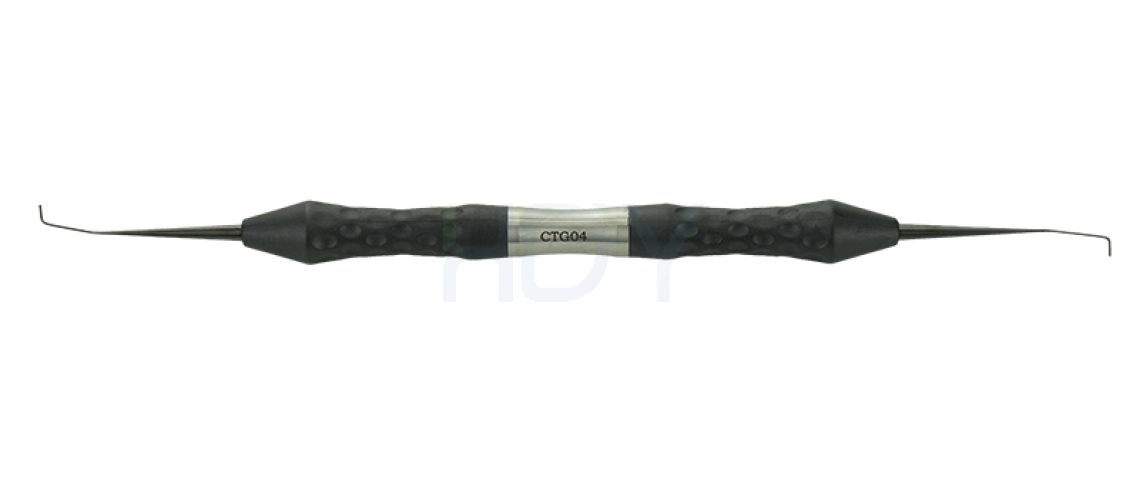
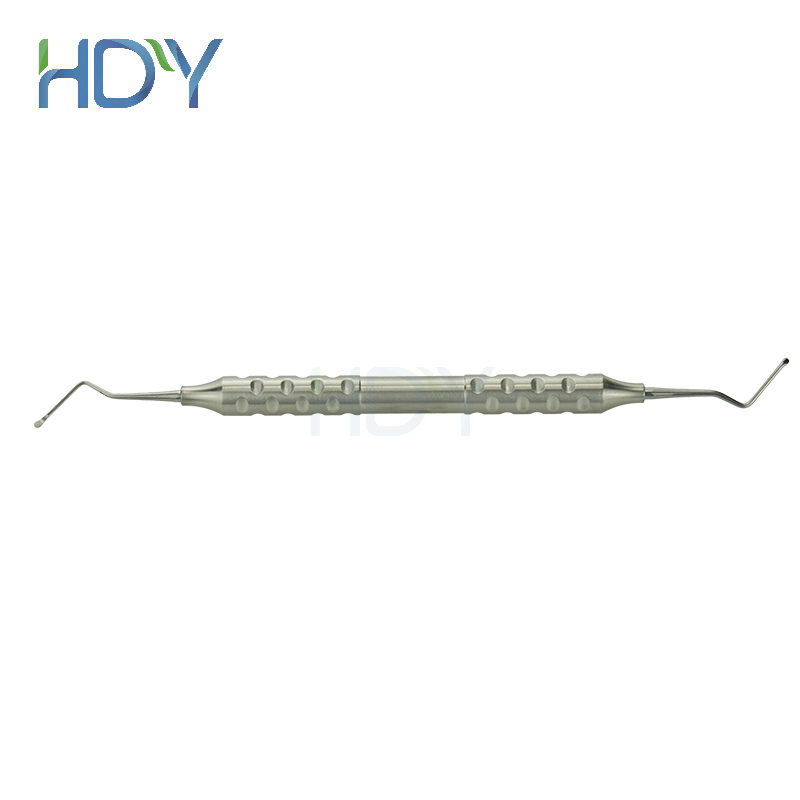
CTG04 Med Micro-Condenser
CTG04 uses fine 0.5 mm left/right working ends for accurate placement and controlled condensation in narrow or restricted posterior areas.
When to select CTG04
- The preparation is narrow or requires a fine contact point.
- The posterior access path requires a curved working end.
- The operator needs controlled incremental material placement.
- A wider condenser would obstruct the view or exceed the cavity dimensions.
4. CTG05: Wider Posterior Condensation

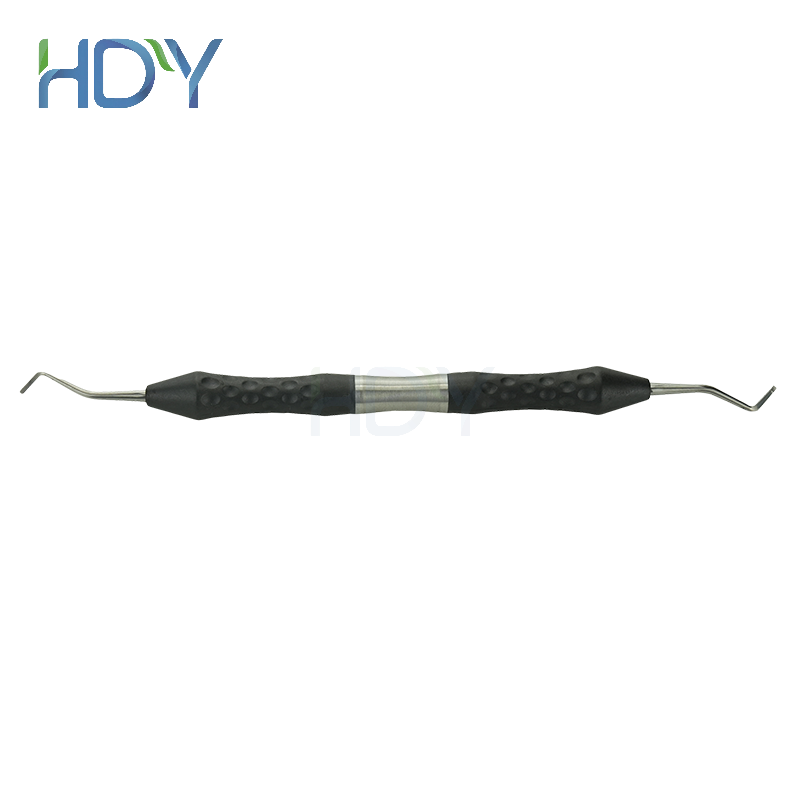
CTG05 Med Micro-Condenser
CTG05 uses 0.9 mm left/right curved working ends. The broader contact surface supports material adaptation and condensation in wider posterior retrograde preparations.
When to select CTG05
- The cavity provides enough space for a 0.9 mm working end.
- A broader surface is useful for adapting a larger increment of material.
- The case involves restricted posterior access.
- The clinician wants left/right curved options without using a fine 0.5 mm contact point throughout the procedure.
CTG05 is not automatically the “stronger” choice. Its primary difference is working-end size and contact area. Pressure should remain controlled regardless of tip diameter.
5. CTG06: Anterior Straight Condensation

CTG06 Med Micro-Condenser
CTG06 combines straight 0.5 and 0.9 mm working ends in one anterior, dual-ended instrument. It allows the clinician to move between fine placement and wider adaptation without changing instruments.
When to select CTG06
- The surgical path is anterior and relatively direct.
- Both fine and wider working ends may be needed in the same case.
- The operator wants a straight approach under direct vision.
- A curved posterior configuration would complicate the instrument path.
6. CTG04 vs. CTG05 vs. CTG06
| Model | Tip Size | Structure | Recommended Position | Primary Use |
|---|---|---|---|---|
| CTG04 | 0.5 mm | Left / right curve | Posterior | Fine material placement and condensation |
| CTG05 | 0.9 mm | Left / right curve | Posterior | Wider-area adaptation and condensation |
| CTG06 | 0.5 / 0.9 mm | Straight, dual-ended | Anterior | Direct-vision fine and wider filling |
Fast selection rule
- Fine posterior cavity: start with CTG04.
- Wider posterior cavity: select CTG05.
- Anterior direct access: select CTG06.
- Comprehensive endodontic practice: keep all three available.
7. Using Micro-Condensers Under Reflected Vision

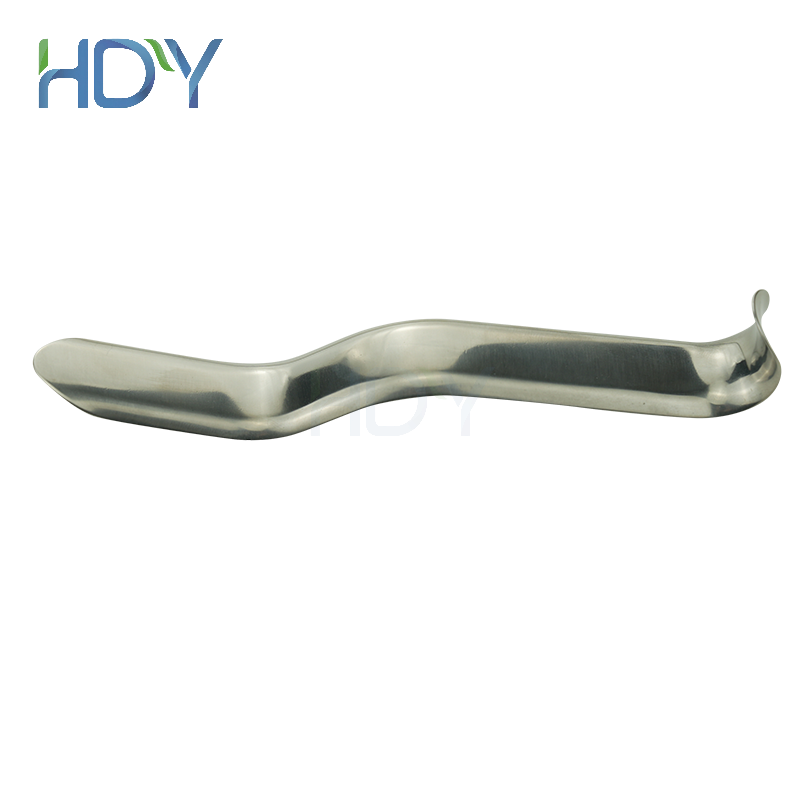
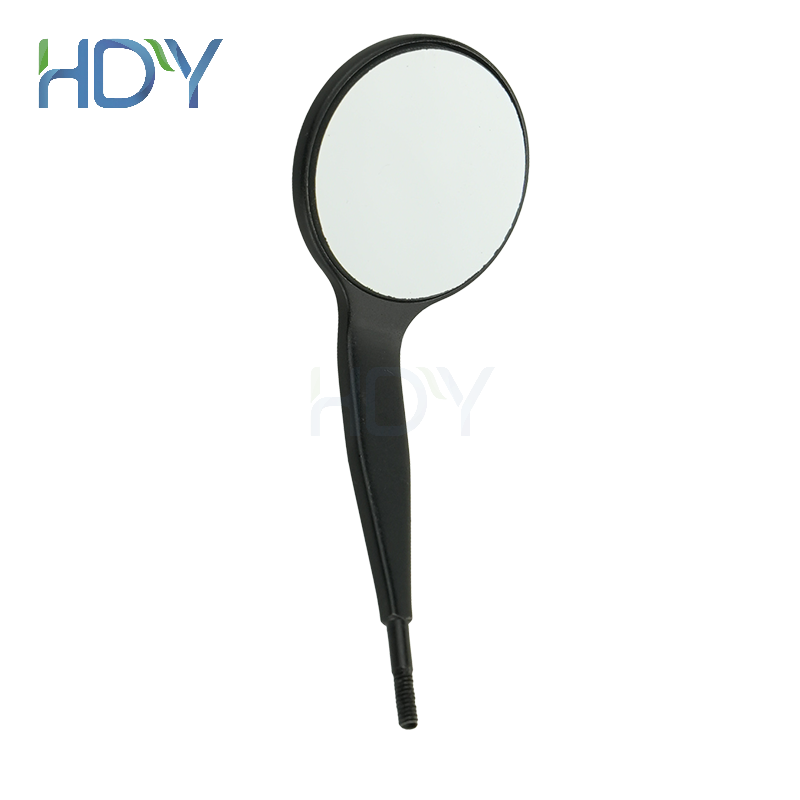
KX4 Micro-Mirror · 9 × 4 mm
The HDY KX4 Micro-Mouth Mirror provides a compact reflected view for checking material seating, preparation walls and restricted posterior areas.
Reflected filling workflow
- Establish a clean, stable reflected view with KX4.
- Select CTG04 or CTG05 according to cavity width and access angle.
- Introduce the condenser without covering the reflected target.
- Observe material seating and lateral-wall adaptation.
- Control working-end depth and avoid contact beyond the preparation.
- Withdraw the condenser before changing the mirror position.
The mirror and condenser should function as a coordinated visual-manual system. If the reflected view is lost, stop condensation, clean or reposition the mirror and re-establish visibility.
8. How Much Pressure Should Be Applied?
The correct pressure is controlled, even and sufficient to adapt the filling material—never forceful simply because the instrument is small.
Why excessive pressure should be avoided
- It may bend or damage a precision micro-tip.
- It reduces tactile sensitivity and controlled movement.
- It can displace material rather than adapt it.
- It may apply unnecessary stress to prepared apical dentin.
- It may cause the handle or working end to obstruct the microscopic field.
9. Cleaning Filling Material from Micro-Tips
Root-end filling materials can harden on small working ends and compromise their original dimensions. Immediate cleaning is essential.
Immediately After Surgery
- Keep instruments moist according to the validated reprocessing protocol.
- Remove visible blood and filling-material residue promptly.
- Do not allow bioceramic or MTA-type material to harden on the tip.
- Separate fine instruments from heavy instruments.
Before Sterilization
- Inspect every working end under magnification.
- Confirm all material has been removed.
- Check for bending, surface damage or loss of tip geometry.
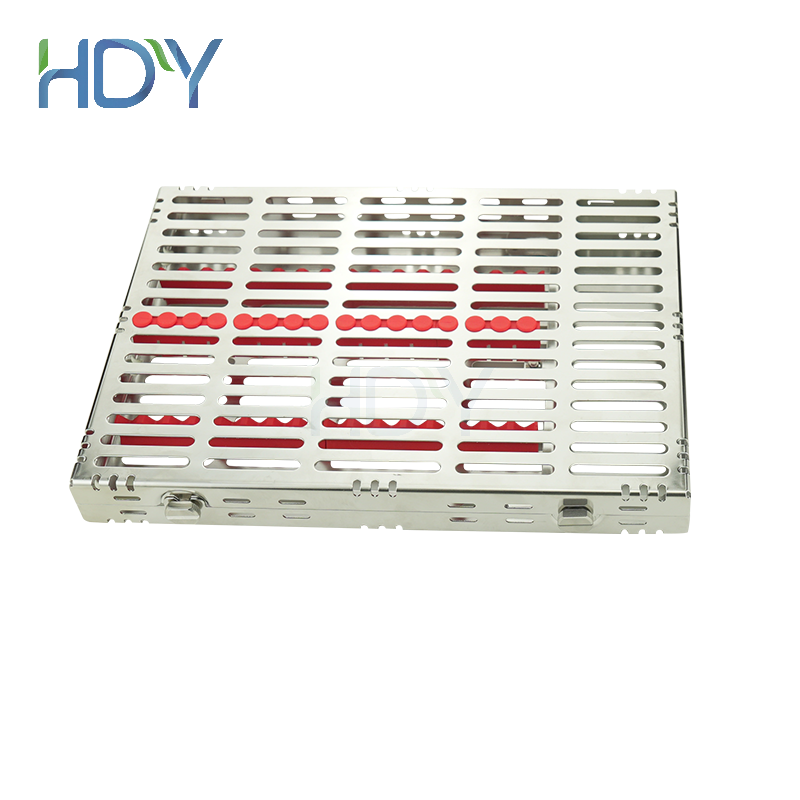
- Secure instruments in a cassette to prevent collision.
HDY CTG micro-condensers are manufactured from medical-grade stainless steel and specified as fully autoclavable up to 134°C. Clinics should always follow applicable infection-control standards and current product instructions.
10. Recommended Purchase Combination
Anterior Practice
Recommended: CTG06
The straight dual-ended model covers 0.5 and 0.9 mm anterior filling under direct vision.
Posterior Practice
Recommended: CTG04 + CTG05
The pair provides fine and wider left/right curved working ends for restricted access.
Comprehensive Specialty
Recommended: CTG04 + CTG05 + CTG06
The complete trio covers anterior and posterior positions plus both working-end sizes.
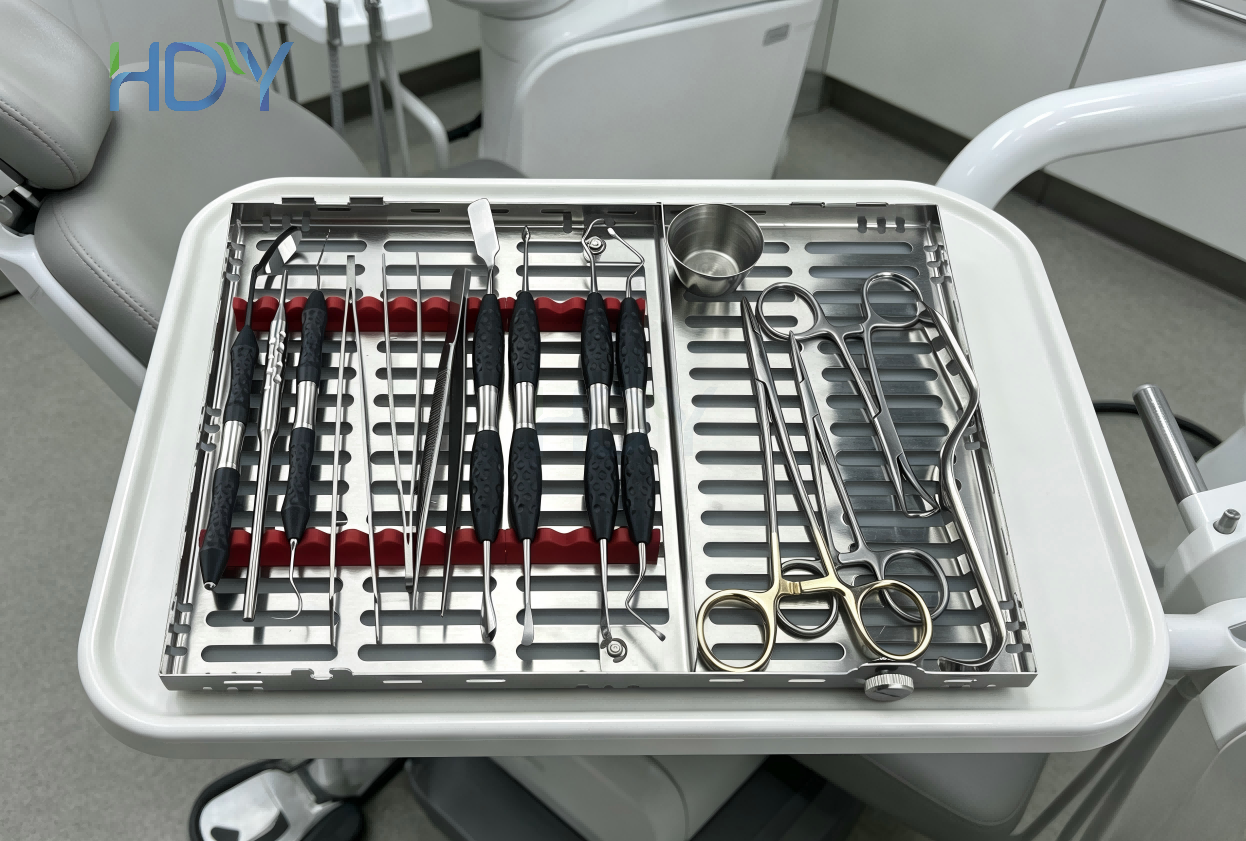
For a hospital department, consider multiple identical trios so procedures can continue while used instruments are being cleaned and sterilized. Arrange each set consistently in a cassette from the HDY dental cassette range.
11. Order HDY Micro-Condensers
HDY Medical Technology (Guangzhou) Co., Ltd. manufactures professional endodontic and microsurgical instruments for dental clinics, specialists and hospitals. Buyers can order individual CTG models or request a complete apicoectomy instrument configuration.
Browse the full HDY microsurgical instrument category, or review each model:
- CTG04 0.5 mm Left/Right Micro-Condenser
- CTG05 0.9 mm Left/Right Micro-Condenser
- CTG06 0.5/0.9 mm Anterior Micro-Condenser
Compare and Order HDY CTG Micro-Condensers
Tell HDY whether your cases are mainly anterior, posterior or comprehensive. The team can recommend CTG04, CTG05, CTG06 or the complete three-model configuration.
Request CTG PricingFrequently Asked Questions
What is the difference between CTG04 and CTG05?
Both use left/right curves for posterior access. CTG04 has a fine 0.5 mm working end, while CTG05 has a wider 0.9 mm working end.
Which HDY micro-condenser is designed for anterior teeth?
CTG06 uses a straight anterior design with dual 0.5 and 0.9 mm working ends.
Should an endodontist purchase all three models?
A specialist treating both anterior and posterior cases benefits from the complete trio because it covers straight and curved access plus fine and wider cavity sizes.
Can CTG04 be used with a micro-mirror?
Yes. CTG04 and CTG05 can be coordinated with the KX4 mirror during reflected posterior filling, provided the mirror and condenser do not obstruct each other.
How should filling material be removed from the tips?
Clean the instruments promptly after use according to the clinic’s validated protocol. Do not allow filling material to harden on the precision working ends.
 English
  简体中文
简体中文  Español
  Deutsch
  Français