


Microscopic Apicoectomy Instrument Set for Endodontists
A complete root-end surgery set should support accurate exploration, reflected inspection, retrograde preparation assessment and controlled filling—not simply place a collection of small instruments in one cassette.
Request an HDY Instrument SetMicroscopic apicoectomy is performed in a limited surgical field where millimeters—and sometimes fractions of a millimeter—affect access, visibility and material placement. The operating microscope gives the surgeon magnification and illumination, but the instruments translate that visual information into precise clinical action.
This practical guide explains how to configure a microscopic apicoectomy instrument set for anterior and posterior root-end surgery. It focuses on six procedure-specific instruments manufactured by HDY Medical: the TZ7 and TZ8 micro-explorers, KX4 micro-mouth mirror, and CTG04, CTG05 and CTG06 micro-condensers.
1. What Is Microscopic Apicoectomy?
Microscopic apicoectomy—also called root-end surgery or endodontic microsurgery—is used when persistent periapical disease cannot be predictably resolved through conventional nonsurgical retreatment alone. Under magnification, the clinician exposes the root apex, removes diseased tissue, resects the root end, prepares a retrograde cavity and places a root-end filling material.
The microscope improves the clinician’s ability to identify fine anatomical details, but successful manipulation still depends on instruments that can enter a narrow field without blocking visibility. A suitable root-end surgery instrument set must therefore combine visual access, tactile exploration and controlled condensation.
2. Why Conventional Dental Instruments Are Not Enough
Standard explorers, mouth mirrors and condensers are designed for general clinical access. During apical microsurgery, their working ends may be too large, too straight or incorrectly angled for the operative site. Oversized instruments can obscure the microscopic field, restrict access and make controlled placement more difficult.
3. Essential Instruments for Root-End Surgery
The core manual instruments can be organized according to four clinical tasks:
Ultrasonic retrograde preparation tips and the ultrasonic unit form another important part of the surgical setup. The HDY instruments discussed here support manual exploration, reflective inspection and root-end filling around that preparation stage.
4. TZ7 Anterior Micro-Explorer

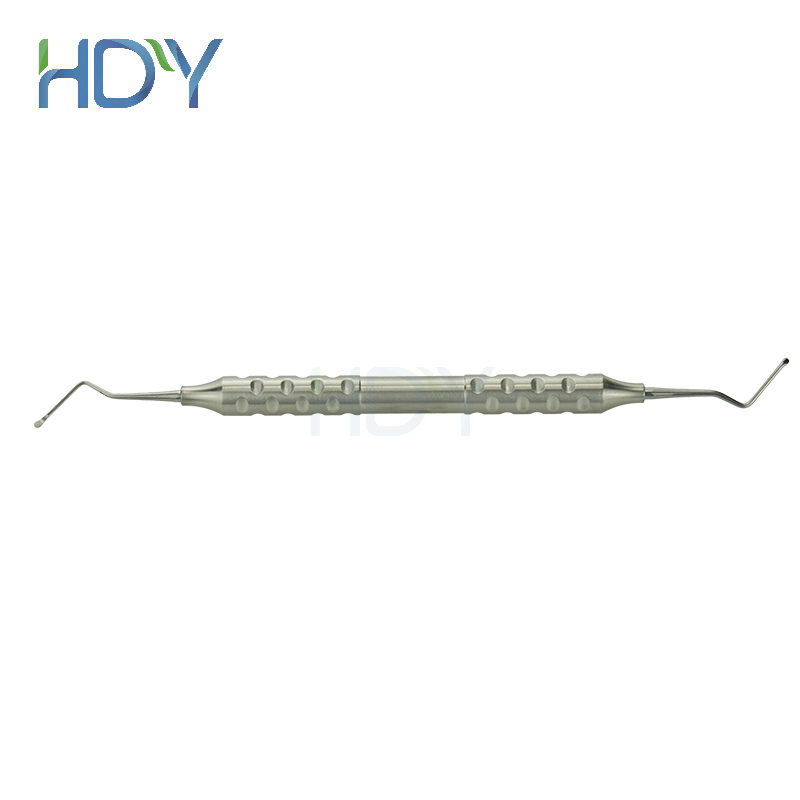
The HDY TZ7 Anterior Micro-Explorer is designed for the more direct access typically available in anterior apical surgery. Its fine working tip helps the clinician identify the root apex, trace the resected surface and examine the margins of a retrograde cavity.
It can also assist in detecting irregularities that may be difficult to confirm visually, including fine cracks, calcified areas and anatomical variations. The explorer should be used with light contact; it is an inspection instrument, not a lever or cutting tool.
Recommended TZ7 applications
- Anterior root-apex localization
- Inspection of the resected root surface
- Assessment of retrograde cavity margins
- Tactile detection of cracks and anatomical irregularities
5. TZ8 Posterior Micro-Explorer

Posterior root-end surgery presents a different access path. The HDY TZ8 Posterior Micro-Explorer provides a purpose-oriented working-end configuration for inspecting restricted posterior sites while preserving visibility under the microscope.
Clinicians can use TZ8 with the KX4 mirror to examine areas that cannot be reliably assessed through direct vision. For a clinic that performs both anterior and posterior apicoectomy, TZ7 and TZ8 should be viewed as complementary rather than interchangeable instruments.
Recommended TZ8 applications
- Posterior apical surgery
- Restricted cavity-margin inspection
- Reflected examination with a micro-mirror
- Evaluation of posterior root-end anatomy
6. KX4 9 × 4 mm Micro-Mouth Mirror

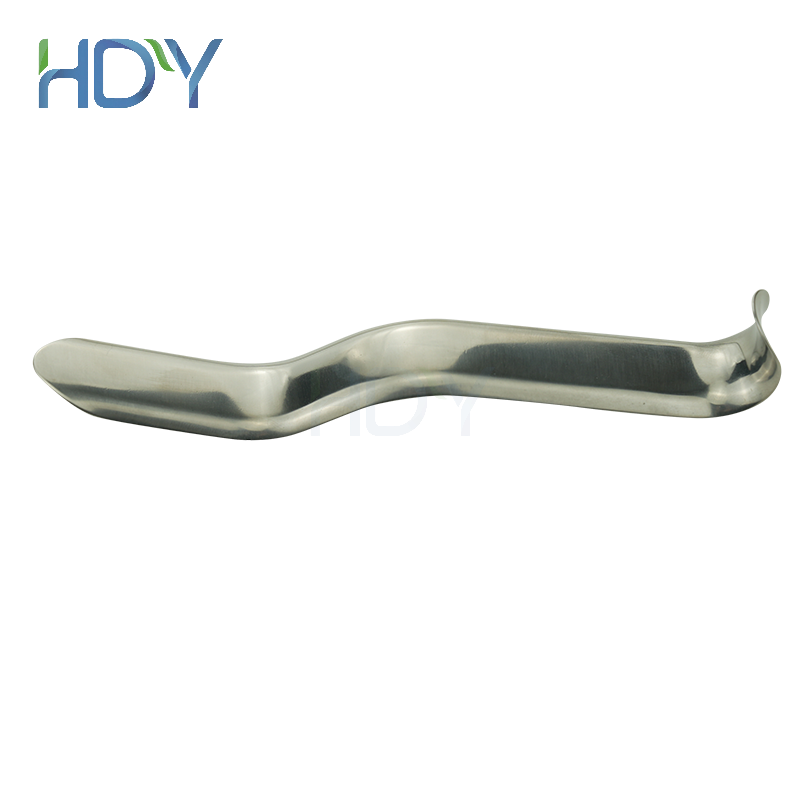
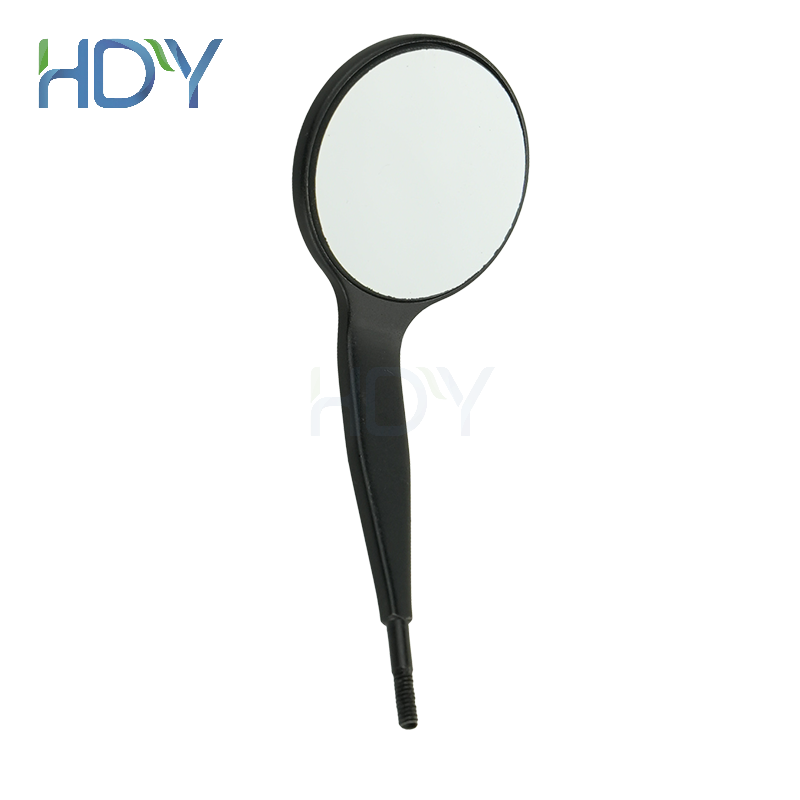
The HDY KX4 Micro-Mouth Mirror has a compact 9 × 4 mm mirror head for reflected observation inside narrow surgical fields. It helps the operator inspect the resected root surface, dorsal aspect, lateral walls and retrograde cavity without relying only on a direct line of sight.
During use, the microscope, patient and mirror should be positioned as one visual system. Blood, debris or fogging on the reflective surface can quickly compromise image quality, so the mirror must be cleaned whenever visibility begins to fall.
7. CTG04, CTG05 and CTG06 Micro-Condensers
After retrograde preparation, the filling instrument must fit both the cavity size and the surgical access angle. HDY provides three complementary condenser configurations.
 FINE POSTERIOR ACCESS
CTG04 · 0.5 mm Left/Right
Fine curved working ends for controlled placement and condensation in restricted posterior areas.
 WIDER POSTERIOR ACCESS
CTG05 · 0.9 mm Left/Right
A wider curved option for adapting and compacting filling material in larger posterior preparations.
 ANTERIOR DIRECT ACCESS
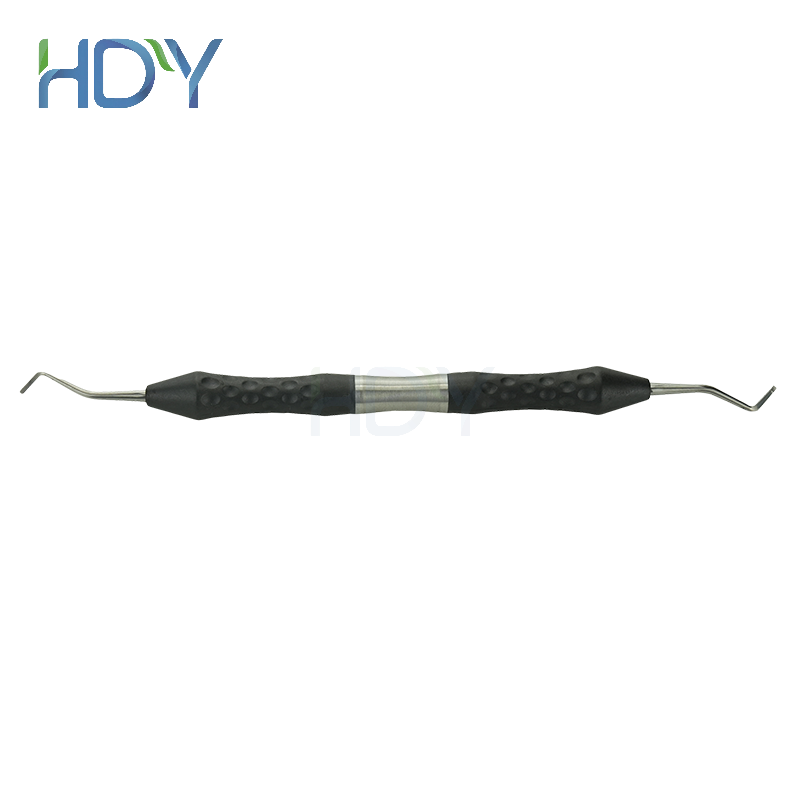
CTG06 · 0.5/0.9 mm Anterior
A straight dual-ended design for fine and wider condensation under direct anterior vision.
VISUAL COORDINATIONUse with the KX4 Mirror
Reflected observation helps verify material seating and adaptation during posterior condensation.
Whichever model is selected, condensation should use even, controlled pressure. Excessive force can reduce tactile control, damage precision tips or apply unnecessary stress to the prepared root end.
8. Recommended HDY Apicoectomy Set Configuration
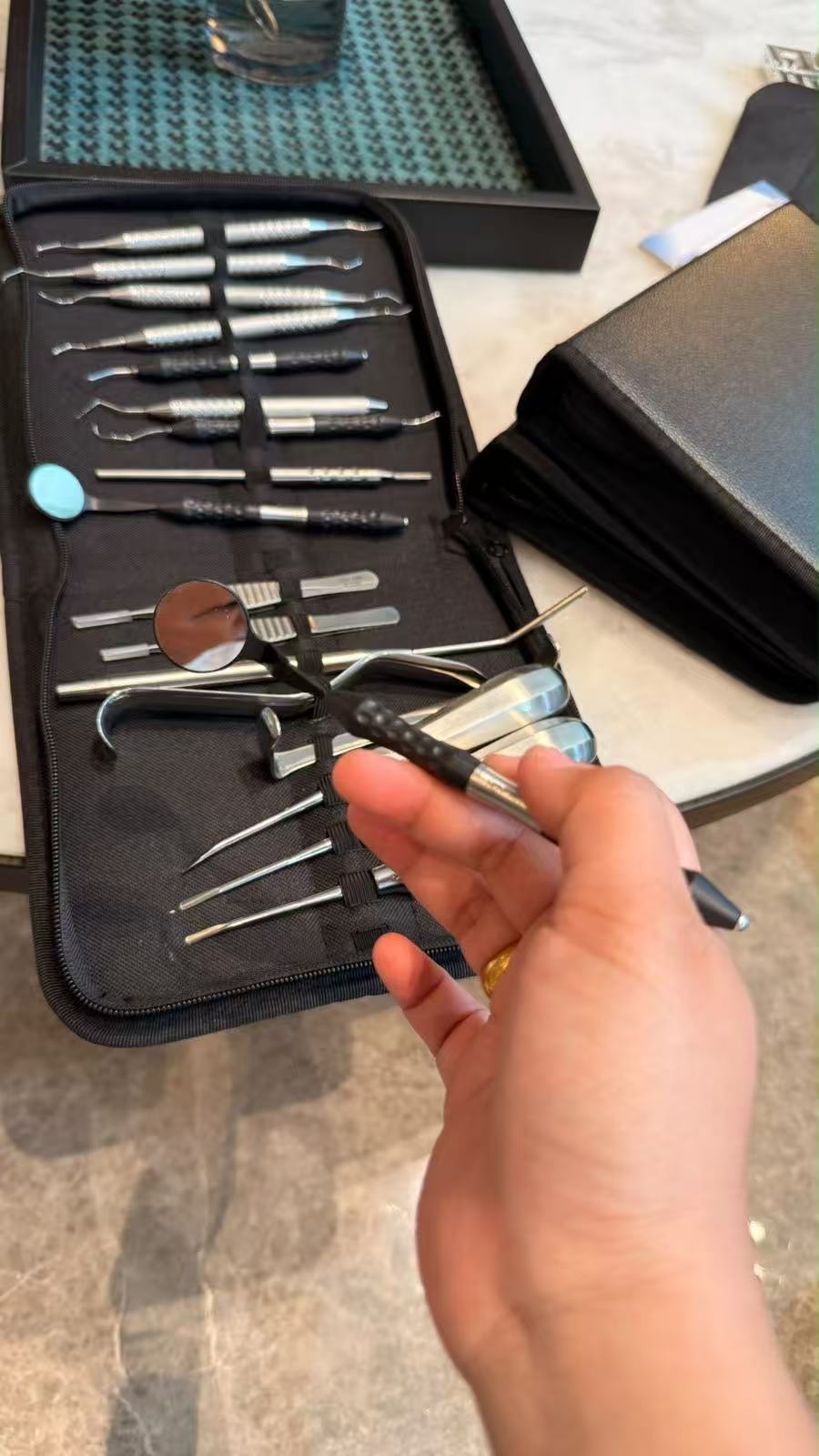
The following six-instrument configuration provides a practical manual instrument core for clinics treating both anterior and posterior cases:
| Surgical Stage | Recommended Instrument | Primary Use |
|---|---|---|
| Root-end exploration | TZ7 | Anterior inspection and direct access |
| Posterior exploration | TZ8 | Restricted posterior inspection |
| Reflected observation | KX4 | Resected surface and retrograde cavity observation |
| Fine condensation | CTG04 | 0.5 mm fine posterior condensation |
| Wider condensation | CTG05 | 0.9 mm posterior material compaction |
| Anterior condensation | CTG06 | Direct anterior filling in two sizes |
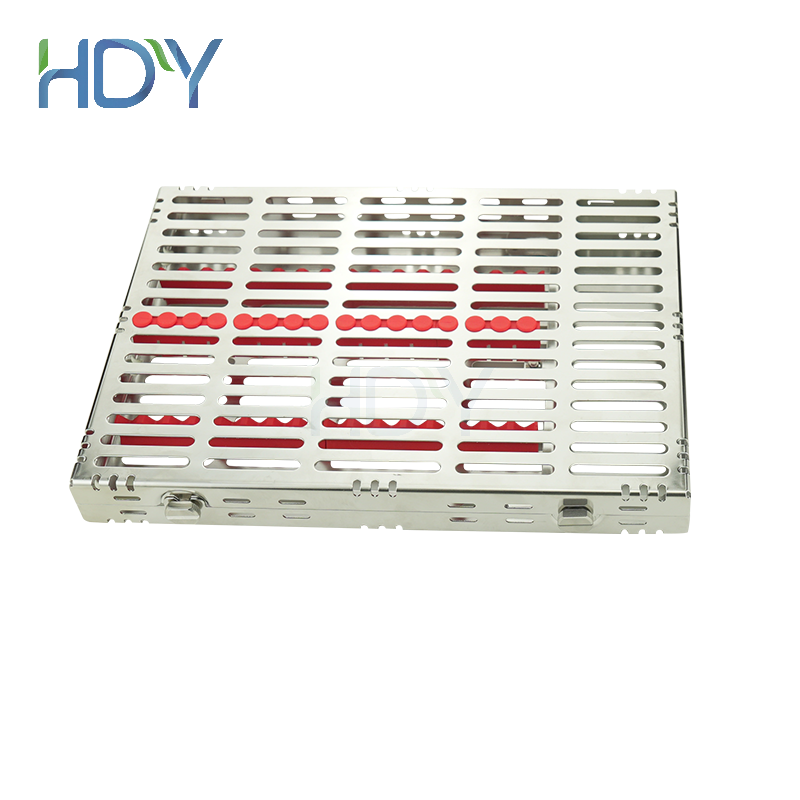
Clinics may also add an appropriately sized sterilization cassette from the HDY dental cassette range to keep working ends separated and protected.
9. How to Select Instruments by Surgical Position
Anterior-focused practice
For a practice mainly treating anterior teeth, TZ7, KX4 and CTG06 form the core combination. CTG06 provides both 0.5 and 0.9 mm ends without requiring a curved posterior geometry.
Posterior-focused cases
Posterior access benefits from TZ8, KX4, CTG04 and CTG05. The two condenser sizes allow the operator to choose according to cavity width and the amount of material being adapted.
Comprehensive endodontic department
A full six-instrument set is the most flexible configuration. It prevents the clinician from trying to use an anterior instrument in a posterior path—or a fine 0.5 mm tip where a broader 0.9 mm working end would be more efficient.
10. Cleaning, Sterilization and Tip Protection
Microsurgical instruments demand careful reprocessing because small working ends can retain blood or filling material and are more vulnerable to impact than conventional instruments.
- Clean instruments promptly after the procedure; do not allow biological or filling-material residue to dry on the tips.
- Follow the clinic’s validated cleaning and sterilization protocol and the instrument instructions for use.
- Inspect tips under magnification before every procedure for distortion, wear or surface damage.
- Secure instruments in a cassette so working ends do not collide during transport and sterilization.
- Do not use micro-explorers or condensers for unintended levering, cutting or forceful manipulation.
HDY’s CTG micro-condensers are manufactured from medical-grade stainless steel and listed as fully autoclavable up to 134°C. Always follow applicable infection-control standards and the current product instructions.
11. Why Endodontists Choose HDY Instruments
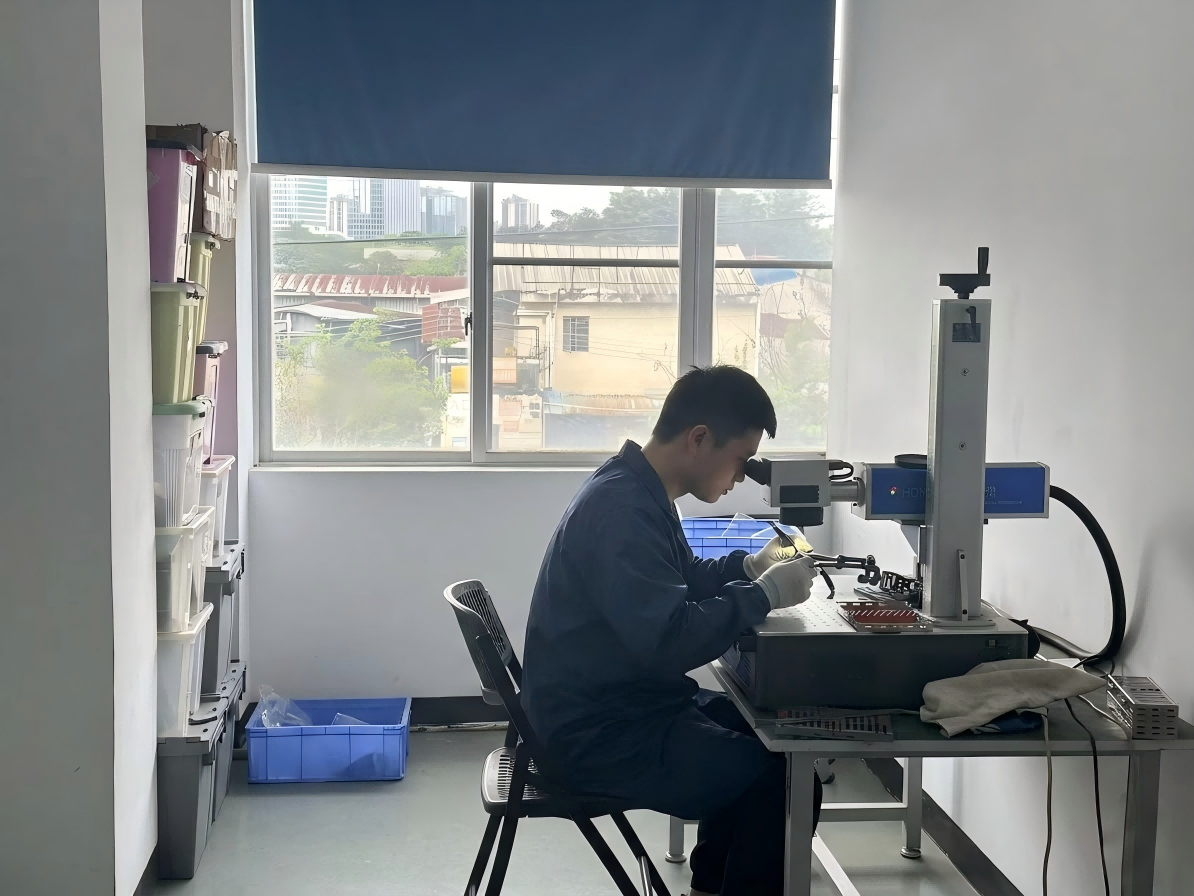
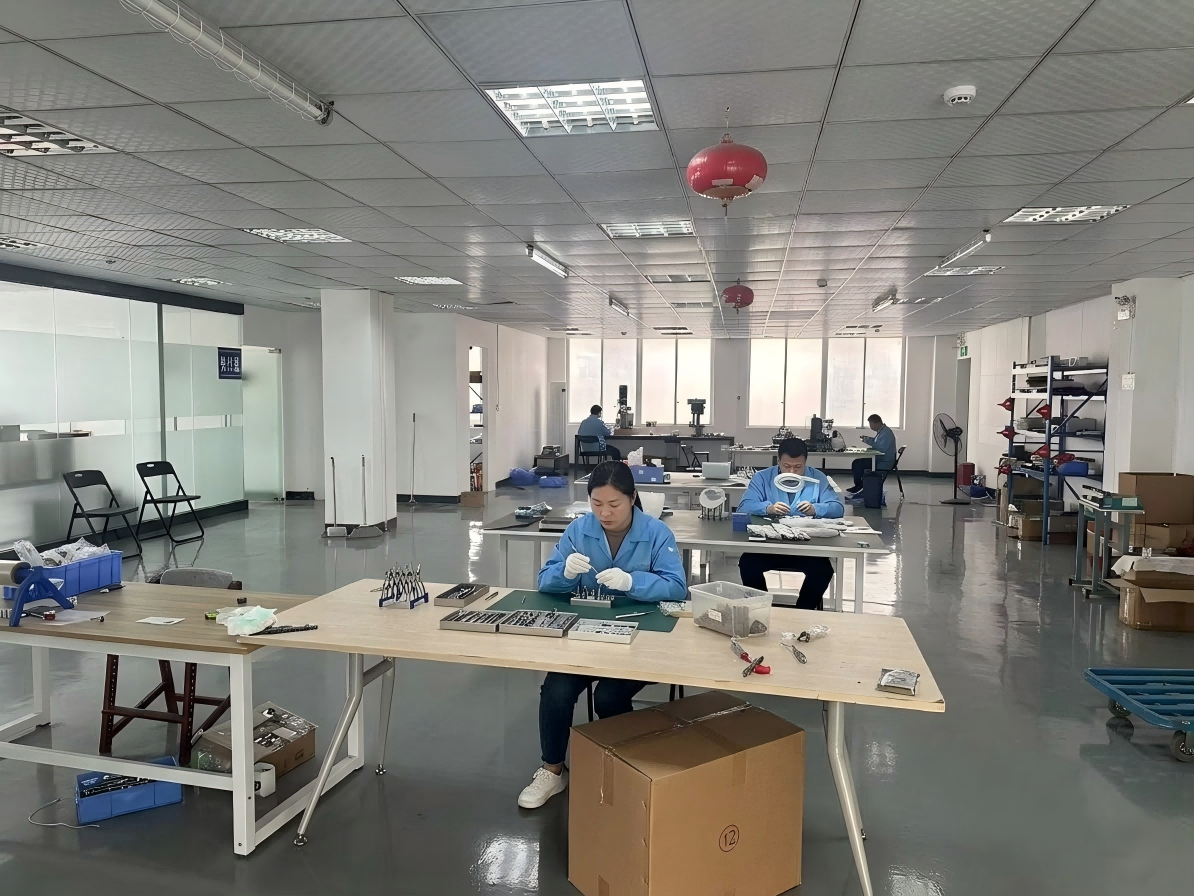
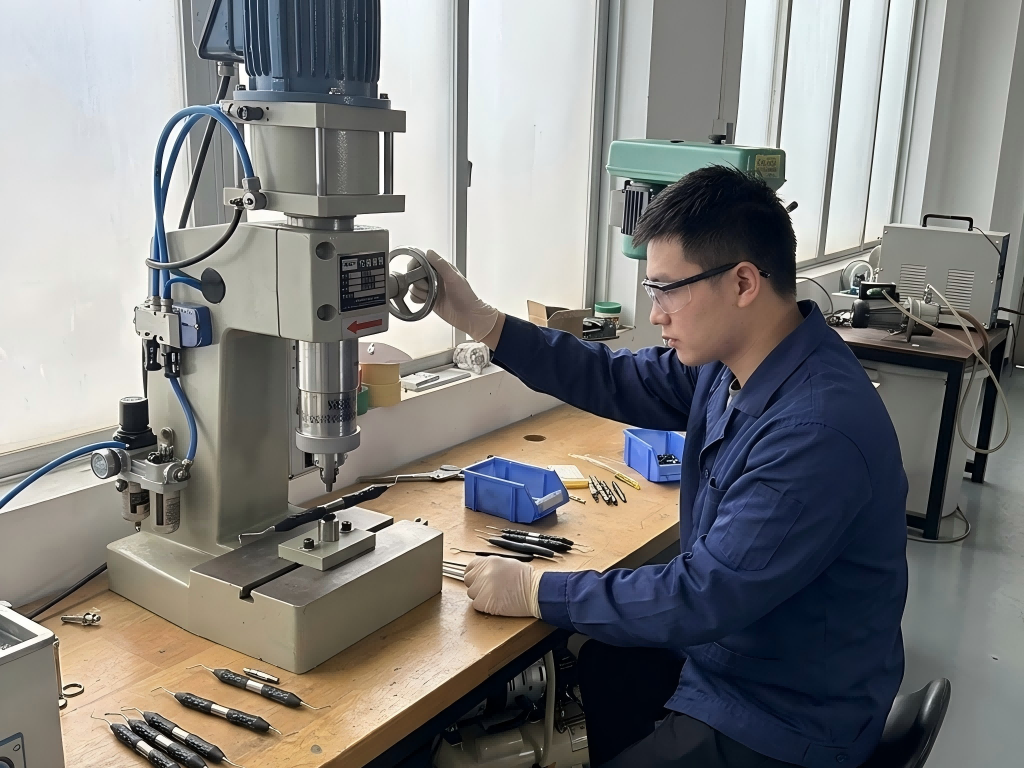
HDY Medical Technology (Guangzhou) Co., Ltd. develops and manufactures professional dental and oral surgical instruments. Its microsurgical range is organized around real operative positions rather than a single universal instrument.
- Procedure-oriented design: distinct anterior and posterior micro-explorers.
- Compact visualization: a 9 × 4 mm mirror for restricted reflective observation.
- Multiple filling options: 0.5 mm, 0.9 mm, curved and straight configurations.
- Reusable construction: medical-grade stainless steel and sterilization-compatible designs.
- Complete product system: individual instruments, clinical combinations and cassettes.
Clinicians can browse the complete HDY microsurgical instrument collection to compare available polymer-handle and metal-handle options.
12. How to Request a Complete Instrument Set
When requesting a quotation, specify the types of procedures performed, the main tooth positions treated, preferred handle style and required quantity. For a complete anterior-and-posterior setup, request TZ7, TZ8, KX4, CTG04, CTG05 and CTG06 as one coordinated set.
Request an HDY Microscopic Apicoectomy Instrument Set
Send HDY your clinical configuration, required quantities or hospital purchasing requirements. The team can provide product details, set recommendations and quotation support.
Contact HDY MedicalFrequently Asked Questions
What should a basic microscopic apicoectomy instrument set include?
A practical manual set includes anterior and posterior micro-explorers, a compact micro-mouth mirror and micro-condensers for fine, wider, anterior and posterior root-end filling.
Do I need both TZ7 and TZ8?
Clinics treating both anterior and posterior cases benefit from both models because surgical access direction and working space differ significantly by tooth position.
What is the difference between CTG04 and CTG05?
Both have left/right curved configurations for restricted access. CTG04 uses a fine 0.5 mm working end, while CTG05 uses a wider 0.9 mm working end.
Which condenser is intended for anterior access?
CTG06 is a straight, dual-ended anterior micro-condenser with 0.5 and 0.9 mm working ends.
Can HDY supply individual instruments as well as a complete set?
Yes. End users can request individual models or contact HDY for a complete configuration based on clinical requirements.
 English
  简体中文
简体中文  Español
  Deutsch
  Français