

1. Incision and flap reflection
Creating an appropriate surgical approach begins with a controlled incision and careful elevation of the mucoperiosteal flap. The working-end geometry of a periosteal elevator affects access, force distribution and the surgeon’s ability to remain close to the bone surface.
HDY periosteal elevators
The HDY periosteal range includes different working-end shapes and handle options for oral surgery, implant surgery and periodontal procedures.
| Model | HDY instrument | Intended role in the surgical setup |
|---|---|---|
| BY03G | Buser periosteal elevator, metal handle | Controlled soft-tissue elevation and flap reflection |
| BG09G | Periosteal elevator | Blunt tissue separation and tension-release procedures |
| BG14G | Periosteal elevator | Broad flap reflection where a larger working surface is preferred |
| BG08G | #8 periosteal elevator, metal handle | Incision-supporting and periosteal-elevation procedures |
| DB02 | #5 round scalpel handle | Controlled blade handling during surgical incision |
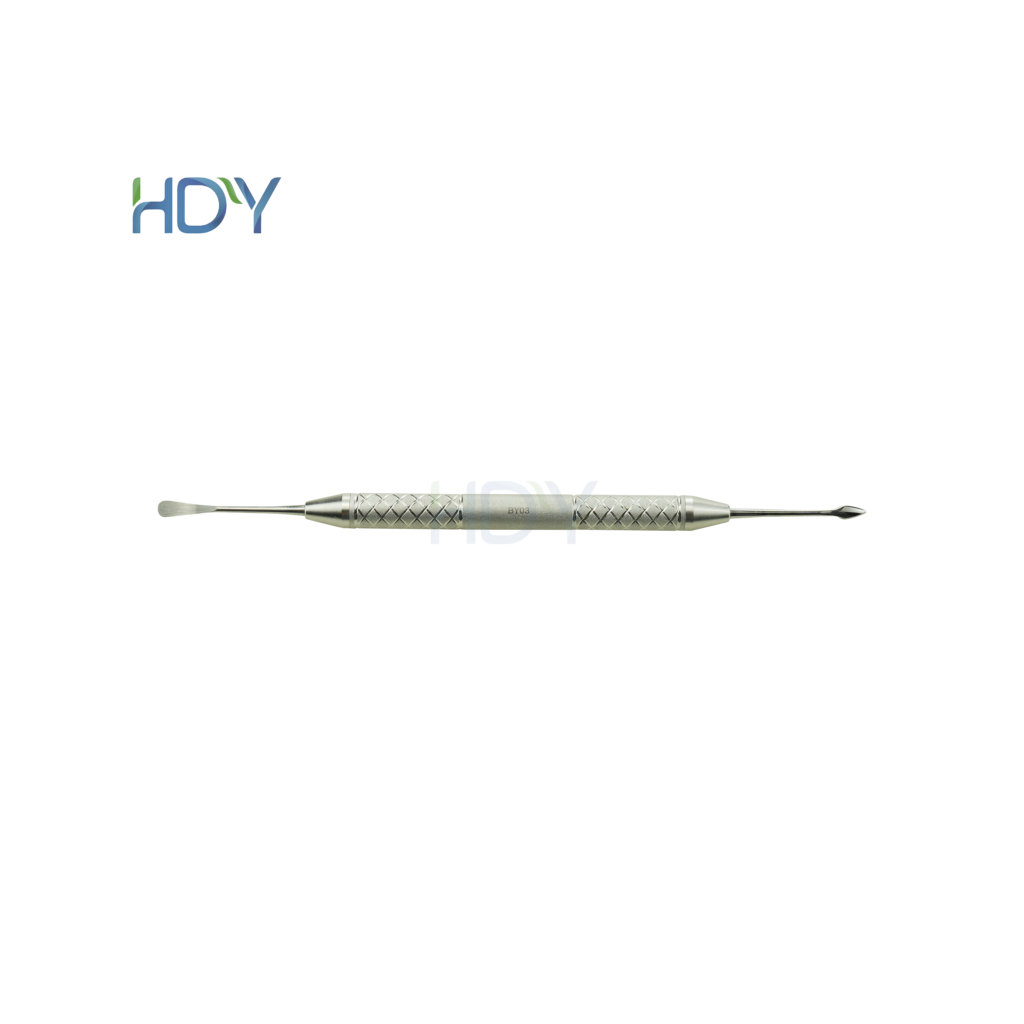
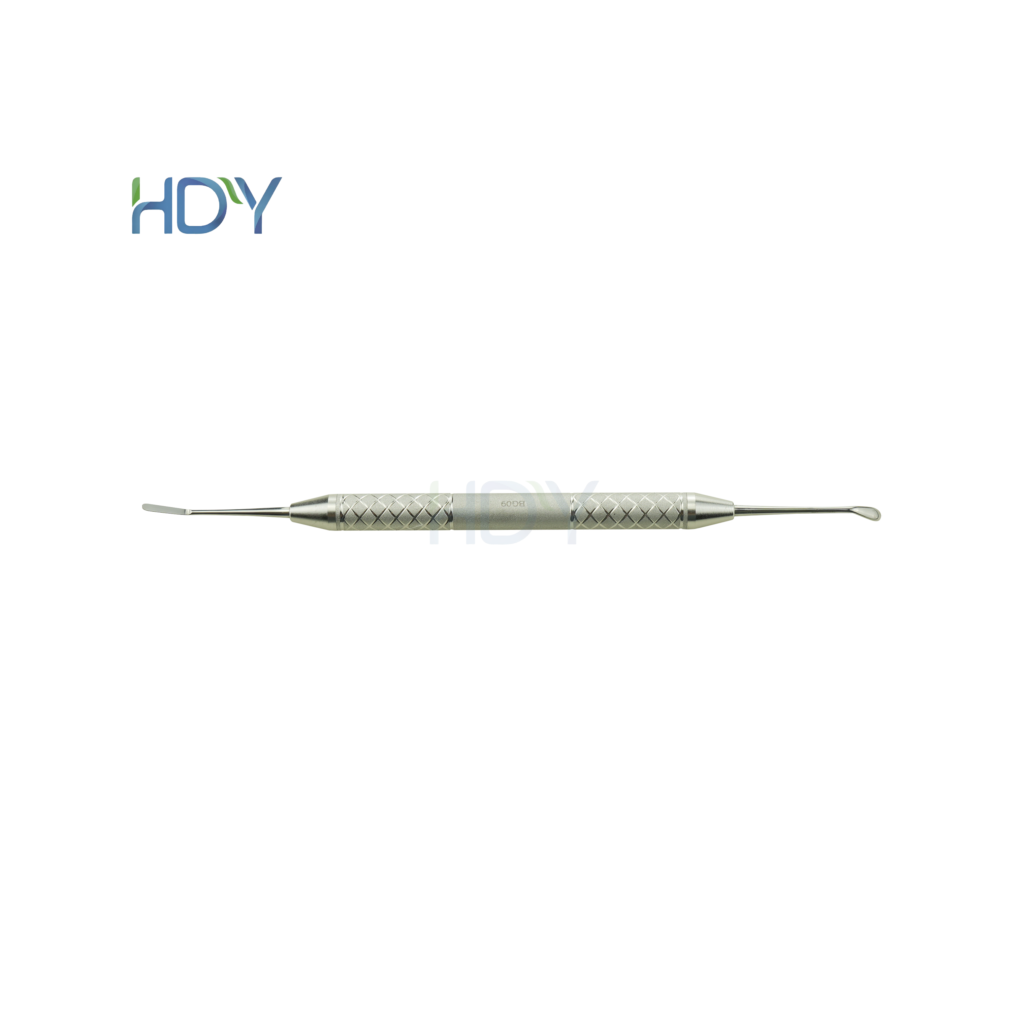
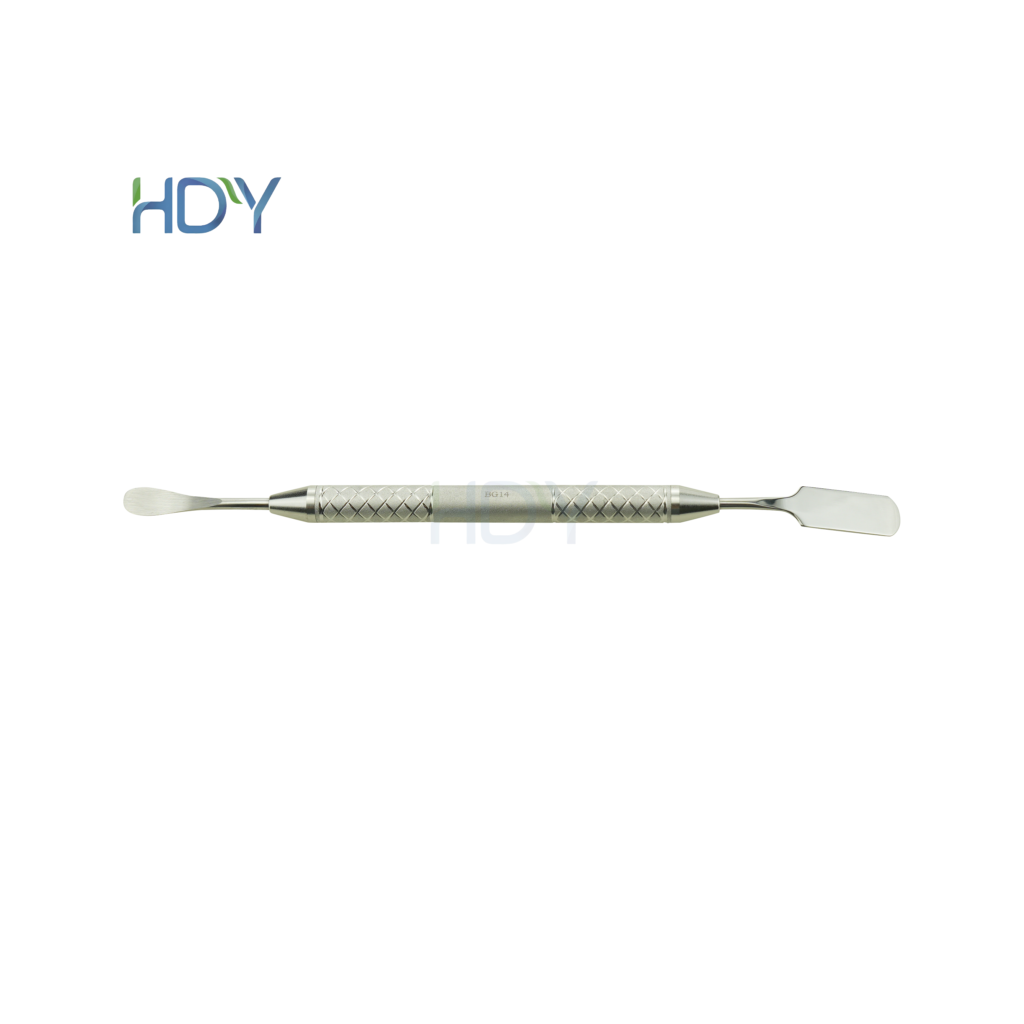
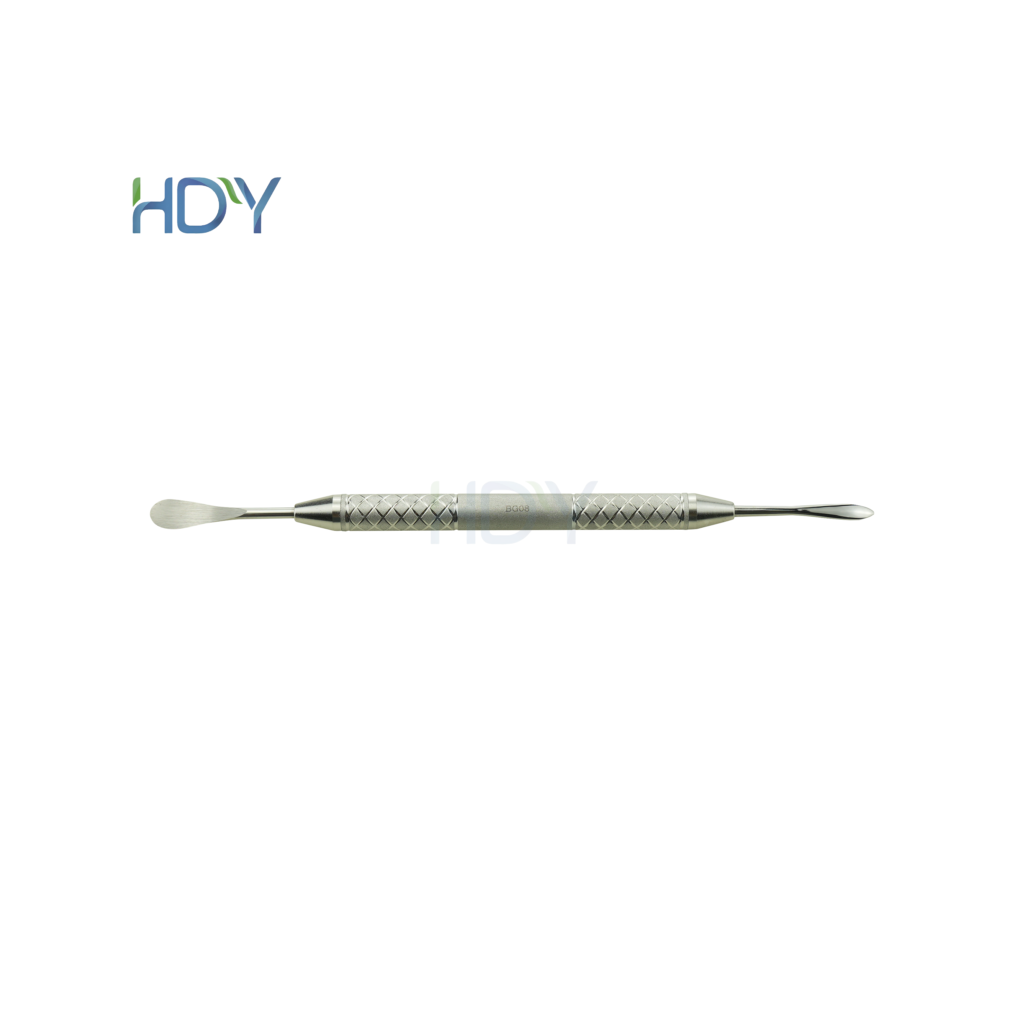
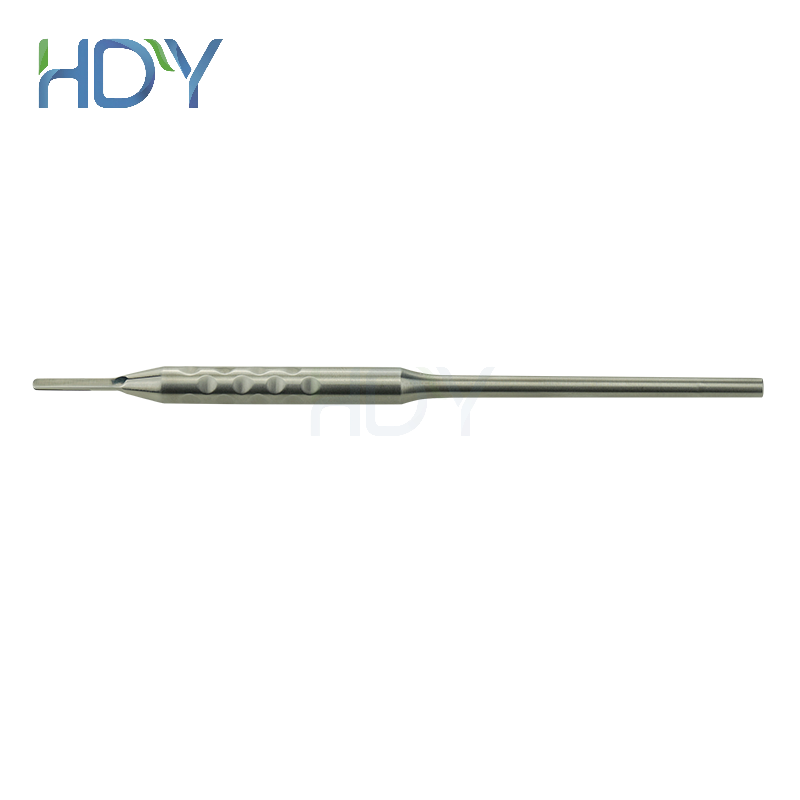
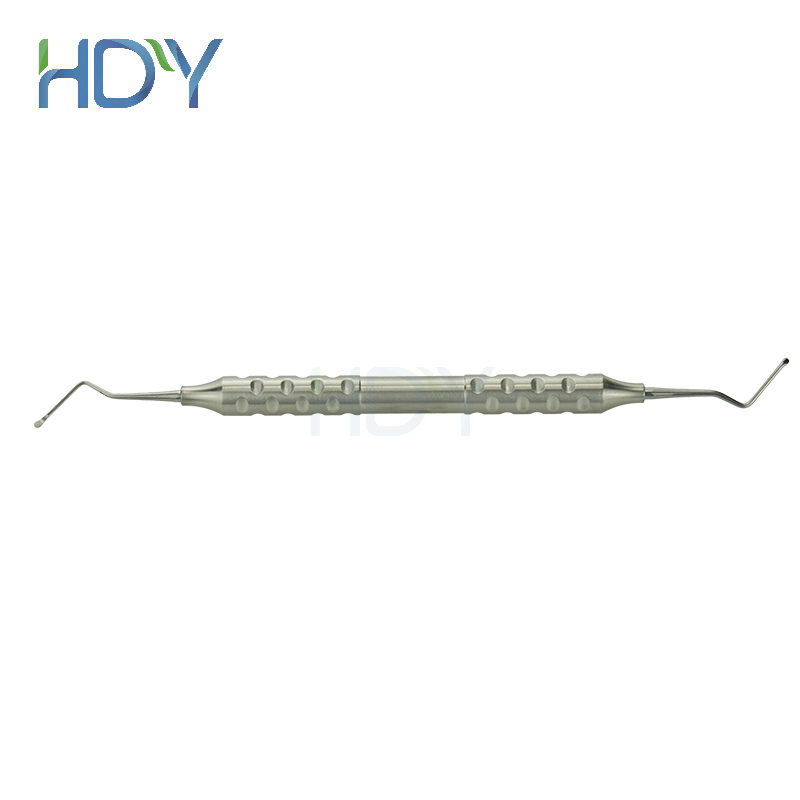
The HDY BY03G Buser periosteal elevator uses a metal handle and is described by HDY as a reusable, autoclavable surgical instrument for tissue elevation and flap management. Its Buser-style working ends are suited to procedures requiring controlled access around bone and soft tissue.
Technique considerations
- Select the elevator according to the flap design and available access.
- Keep the working end controlled and close to the intended tissue plane.
- Use progressive, even pressure instead of sudden levering movements.
- Do not use a fine cutting end as a heavy elevator or bone lever.
- Inspect the working end before every procedure for damage or deformation.
Browse the complete HDY periosteal elevator range.
2. Tissue grasping and needle control
Stable tissue handling is fundamental to flap positioning, wound-edge approximation and microsurgical suturing. The instrument should provide sufficient control while minimizing unnecessary compression of delicate tissue.
HDY dental tissue forceps
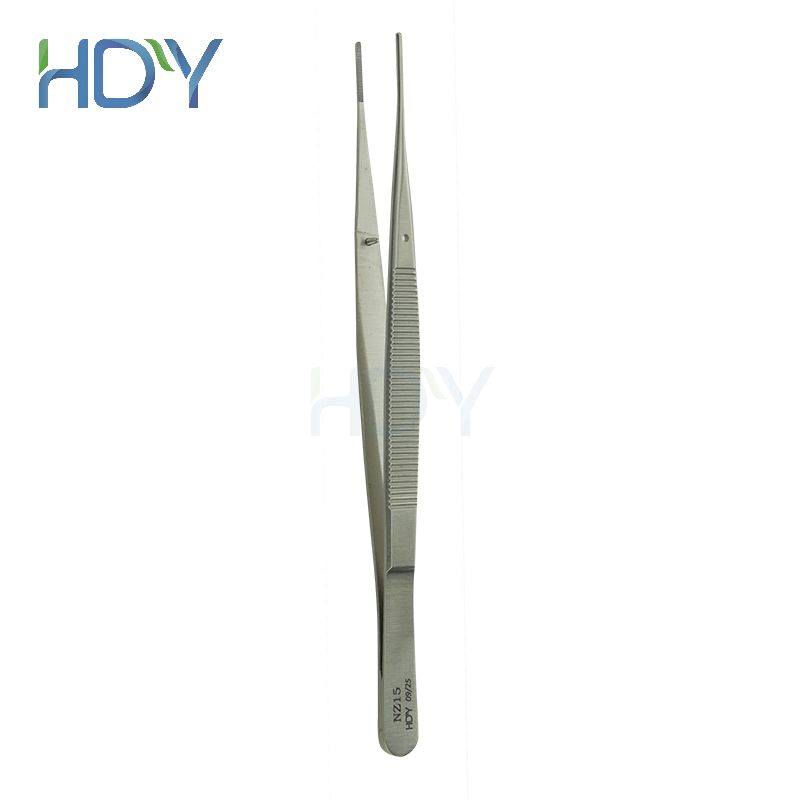
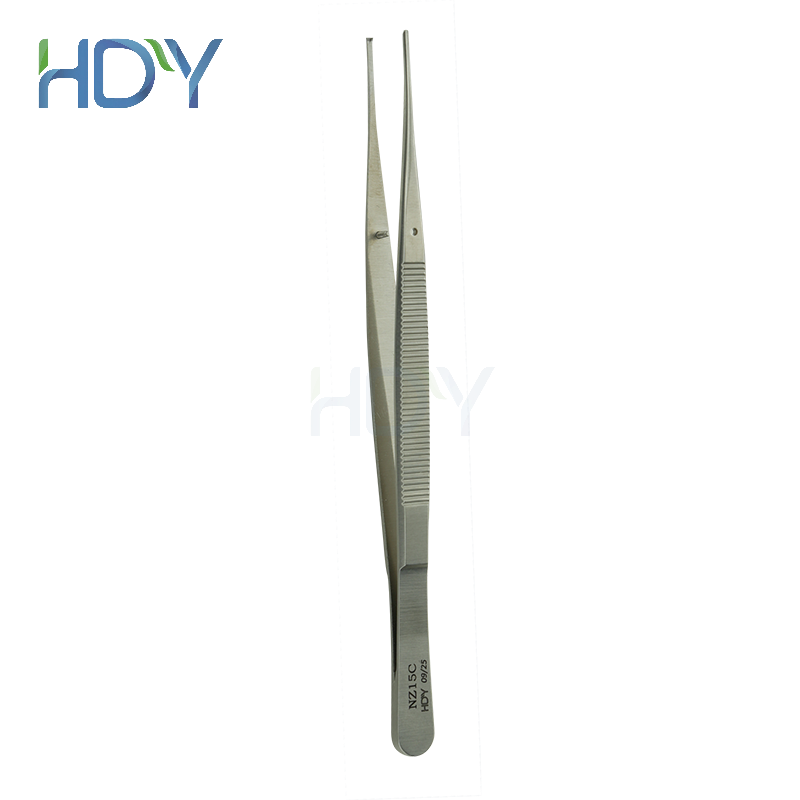
The HDY tissue pliers collection includes straight, curved, plain and 1×2-tooth designs.
| Model | Product configuration | Main application |
| NZ12C | 1×2 tissue pliers, 12 cm | Secure soft-tissue handling in accessible surgical areas |
| NZ15C | 1×2 tissue pliers, 15 cm | Tissue handling where a longer instrument is preferred |
| NX18 | Straight micro tissue pliers, 18 cm | Fine tissue manipulation under magnification |
| NX18W | Curved micro tissue pliers, 18 cm | Access to angled, posterior or deeper working areas |
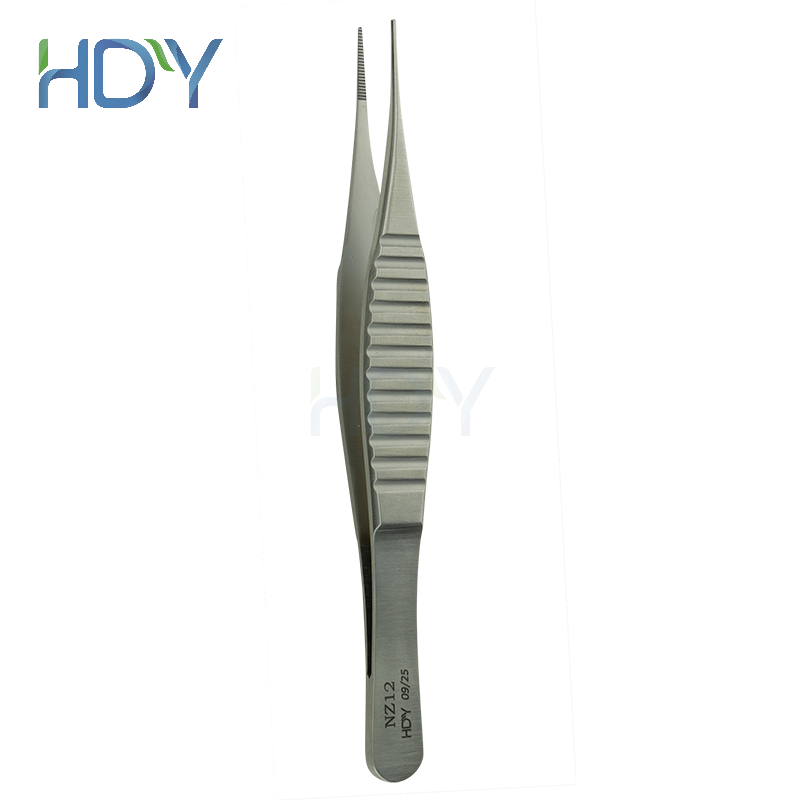
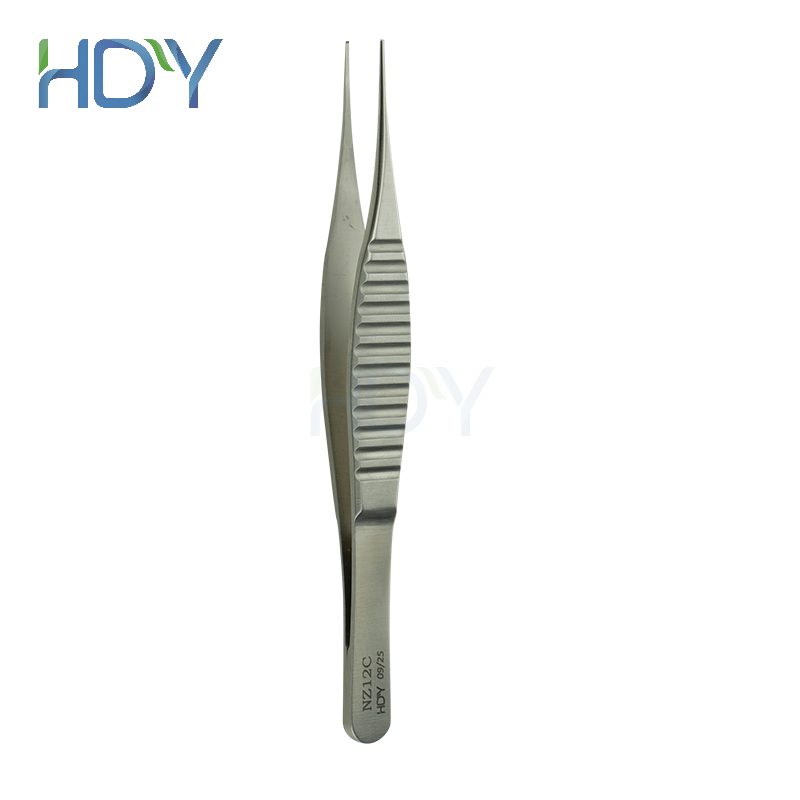
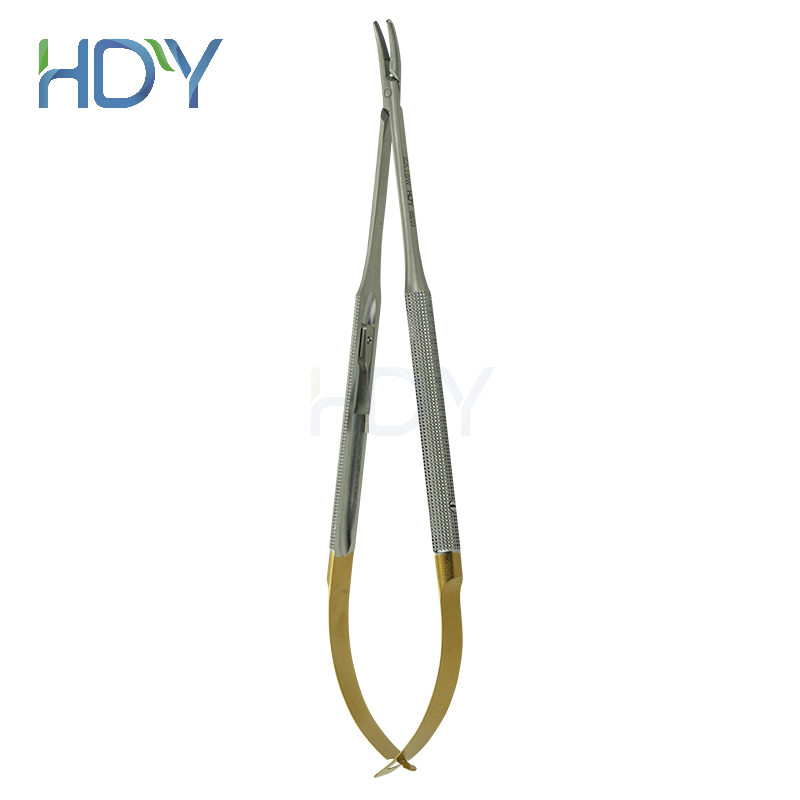
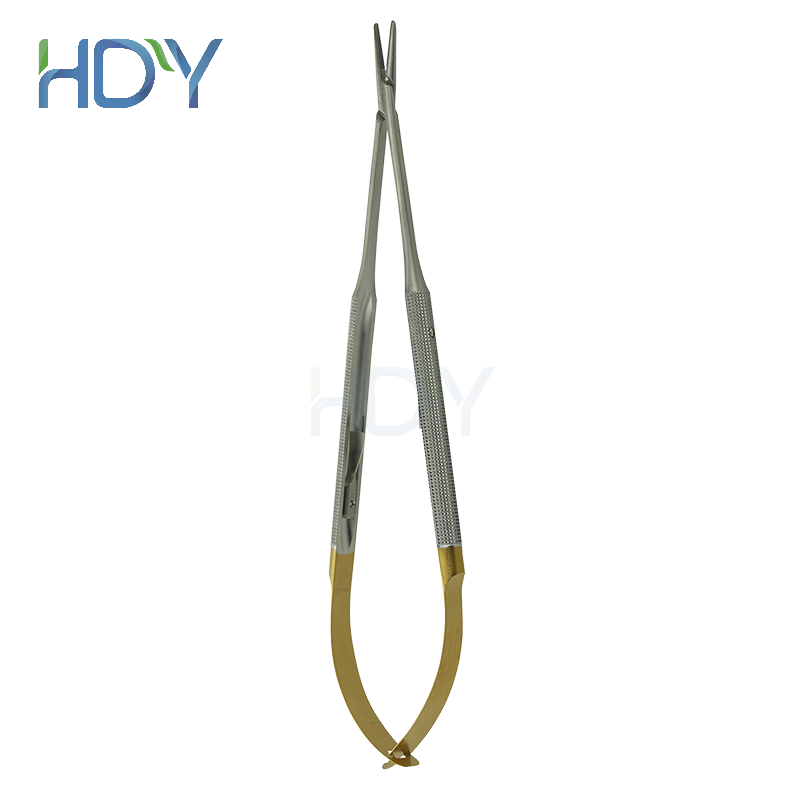
Micro tissue pliers can support fine flap positioning and microsurgical manipulation. The straight NX18 provides direct access, while the curved NX18W can improve approach in areas where a straight shaft limits visibility or hand position.
HDY tungsten-carbide needle holders
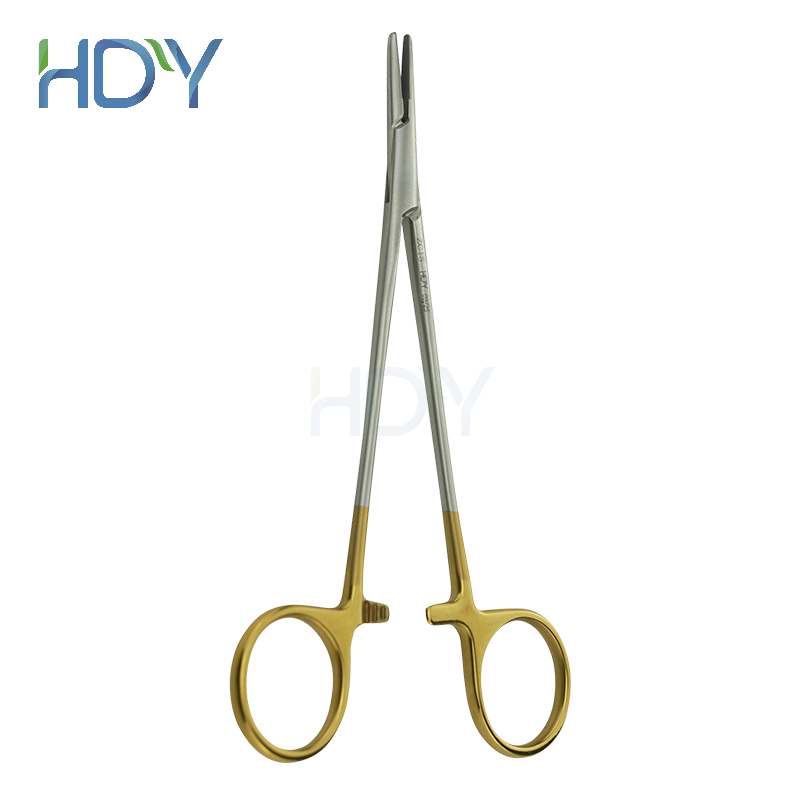
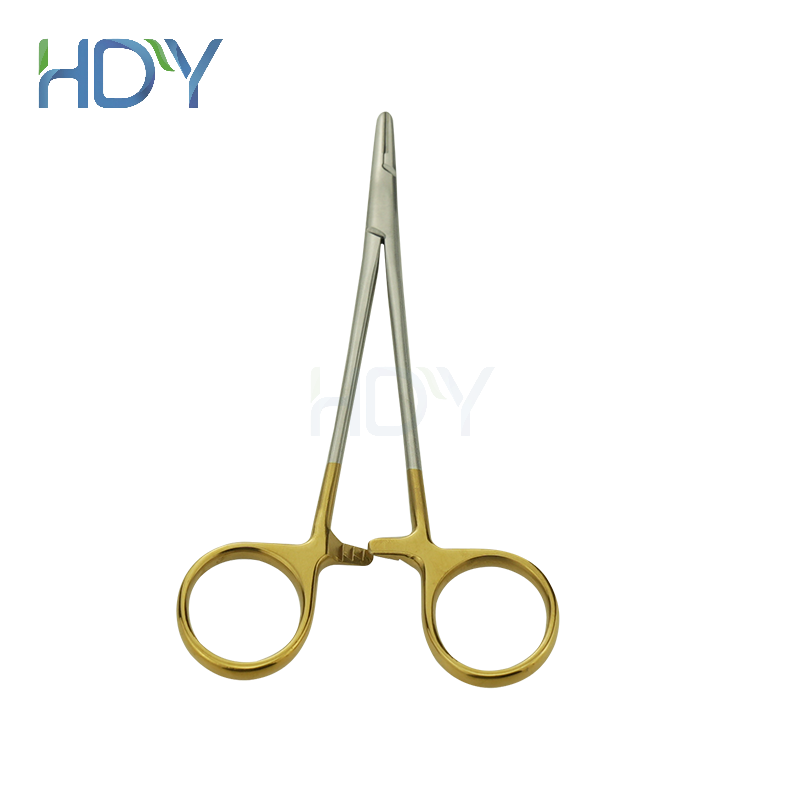
HDY’s dental needle holders include conventional and microsurgical designs with tungsten-carbide inserts.
| Model | Product configuration | Main application |
| ZC15 | Needle holder, 15 cm, tungsten-carbide insert | Routine oral surgical suturing |
| ZC16 | Needle holder, 16 cm, tungsten-carbide insert | Suturing where additional reach is required |
| ZX18Z | Straight Mic Castro needle holder, 18 cm, TC insert | Microsurgical needle control |
| ZX18W | Curved Mic Castro needle holder, 18 cm, TC insert | Microsuturing in angled or posterior areas |
Tissue-handling and suturing considerations
- Select forceps according to tissue thickness, access and required grip.
- Apply only the pressure needed to stabilize the tissue.
- Grasp the surgical needle at the location recommended for its design.
- Avoid repeatedly crushing or repositioning the same wound margin.
- Use controlled wrist rotation to guide the needle through its planned arc.
3. Curettage and surgical debridement
Extraction sockets, bone cavities and surgical sites may require the removal of granulation tissue, infected tissue or debris. Working-end diameter, sharpness and handle stability influence how accurately the surgeon can work inside the site.
HDY surgical curettes
The HDY surgical curette range includes multiple diameters and toothed or non-toothed configurations.
| Model range | Configuration | Intended use |
| WS20G / WS25G / WS28G / WS35G | 2.0, 2.5, 2.8 and 3.5 mm curettes with metal handles | Removal of granulation tissue, infected tissue and debris from surgical sites |
| WS20CG / WS25CG / WS28CG | Toothed curette designs | More active engagement of selected tissue where clinically appropriate |
| ZG4G / ZG5G / ZG6G | Bone curette or scraper configurations | Bone-surface management and selected bone-collection procedures |
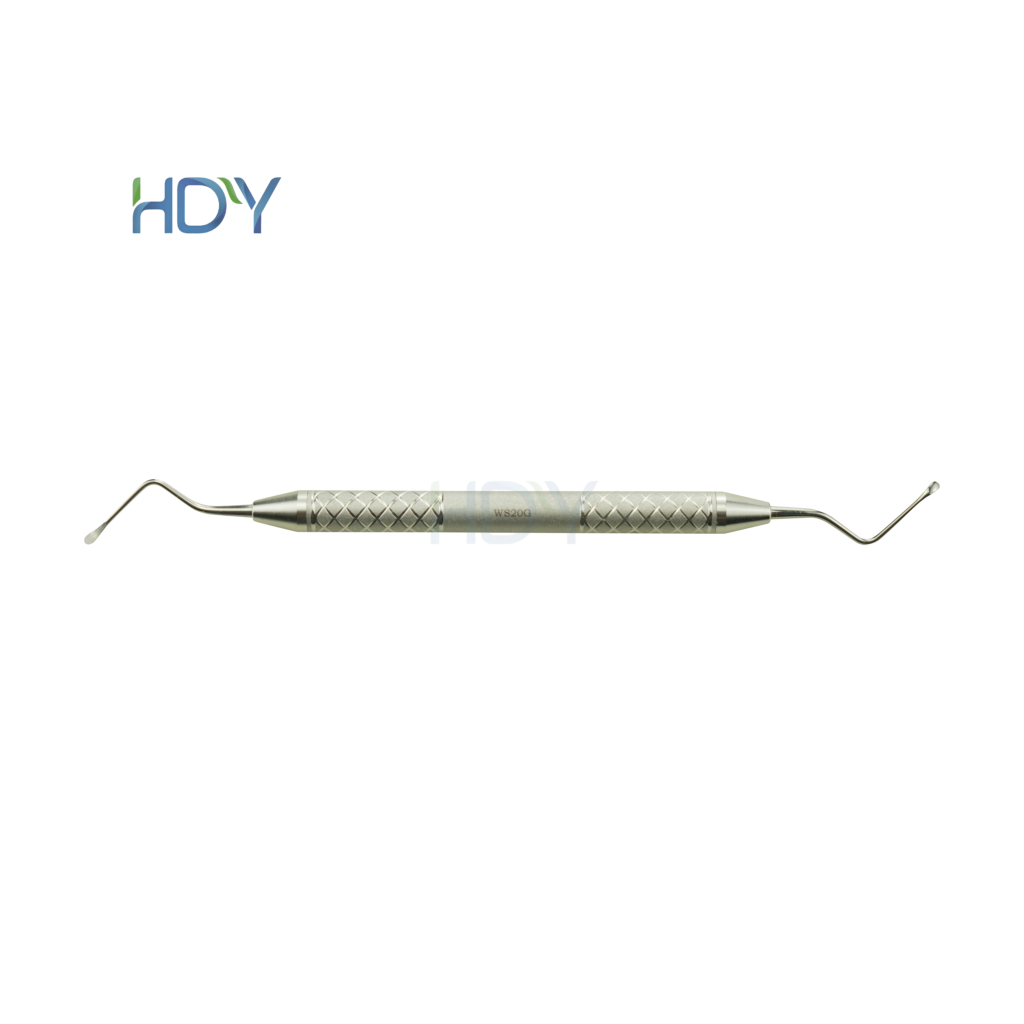
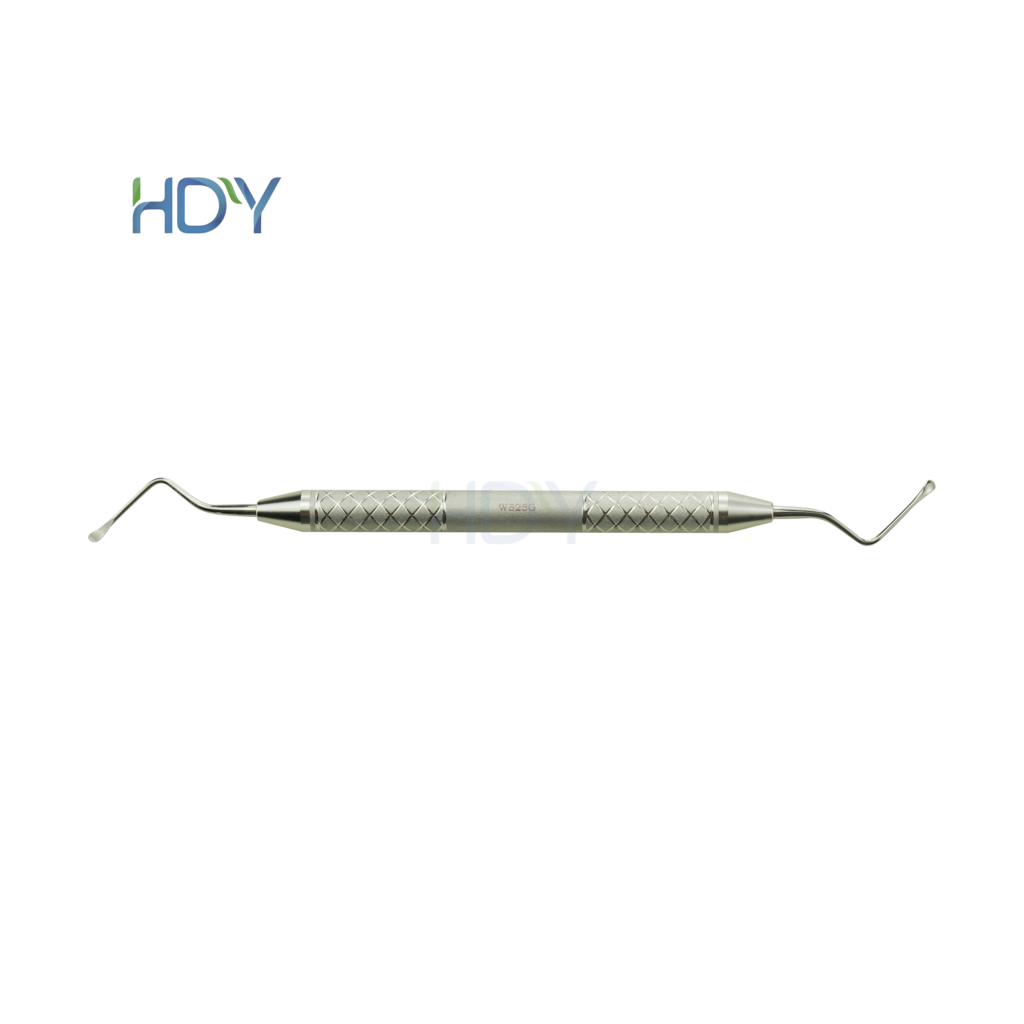
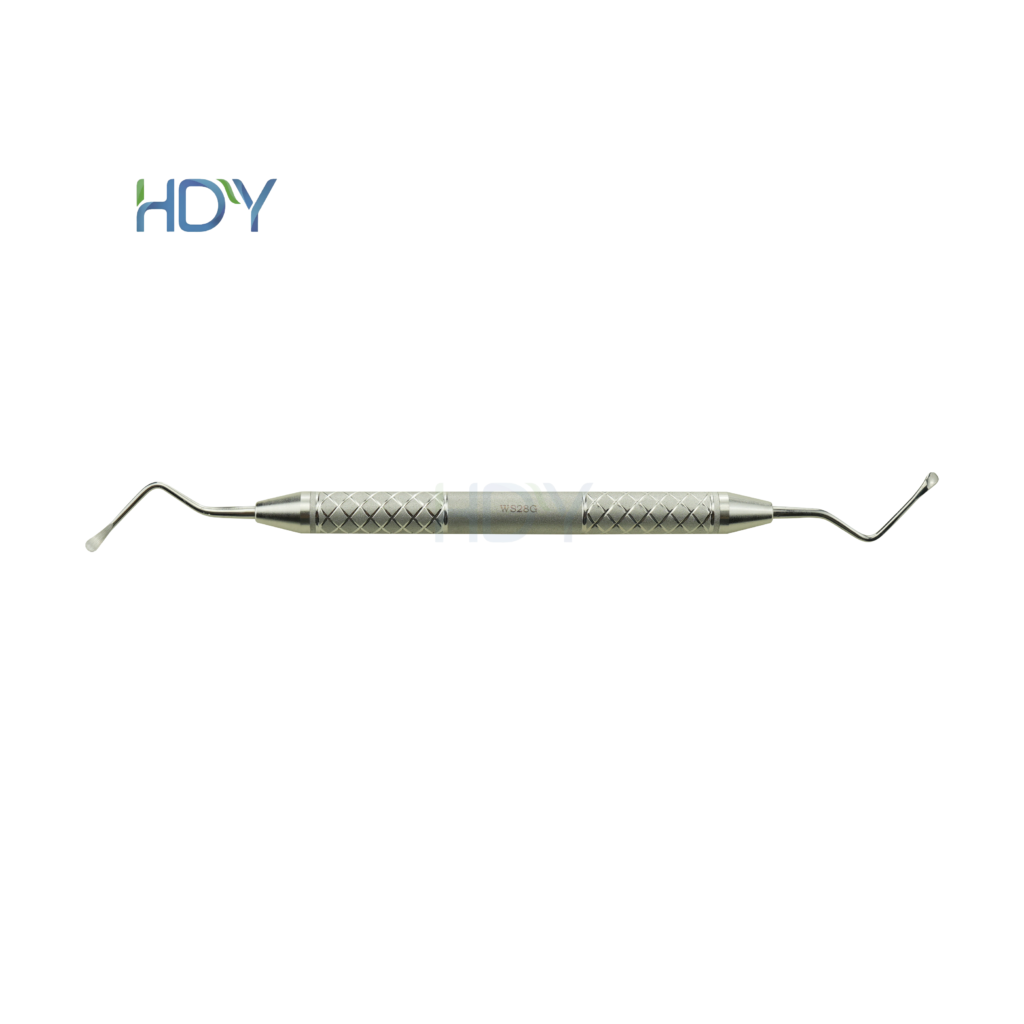
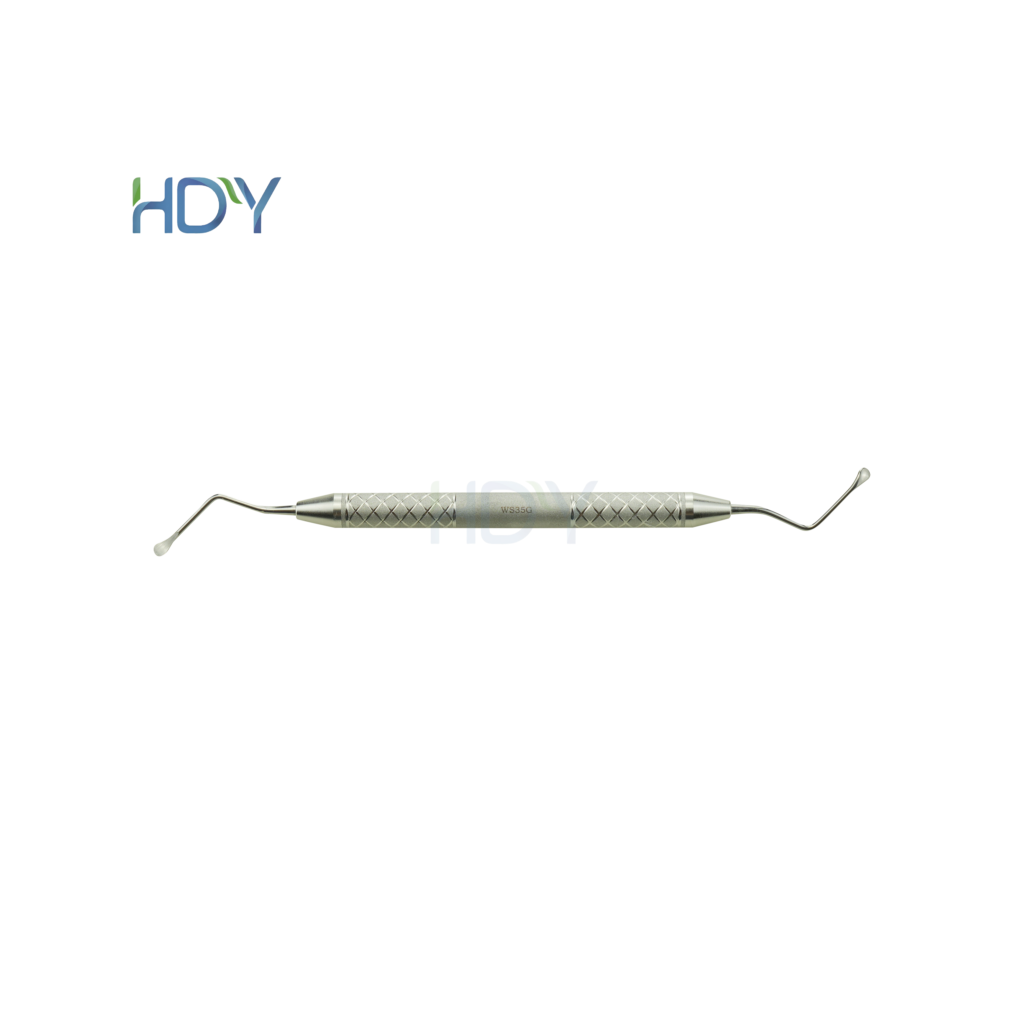
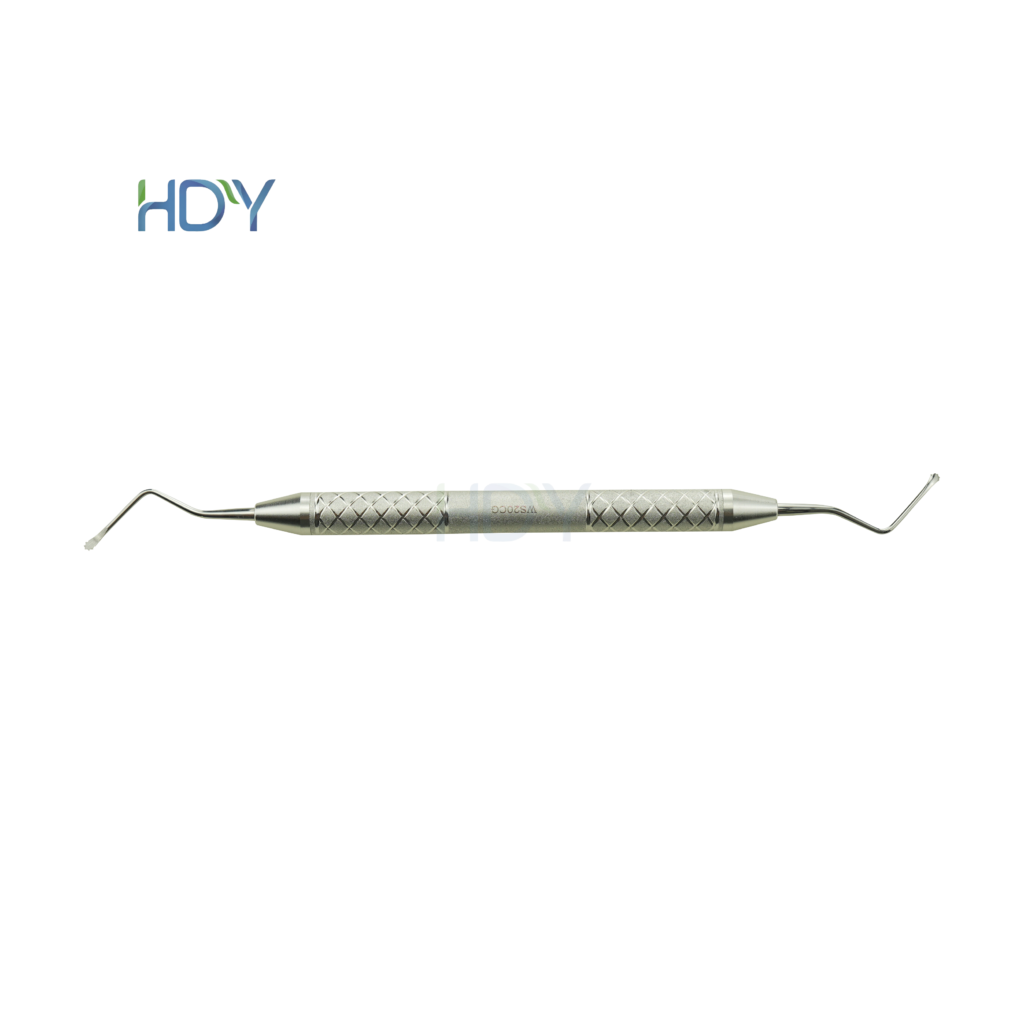
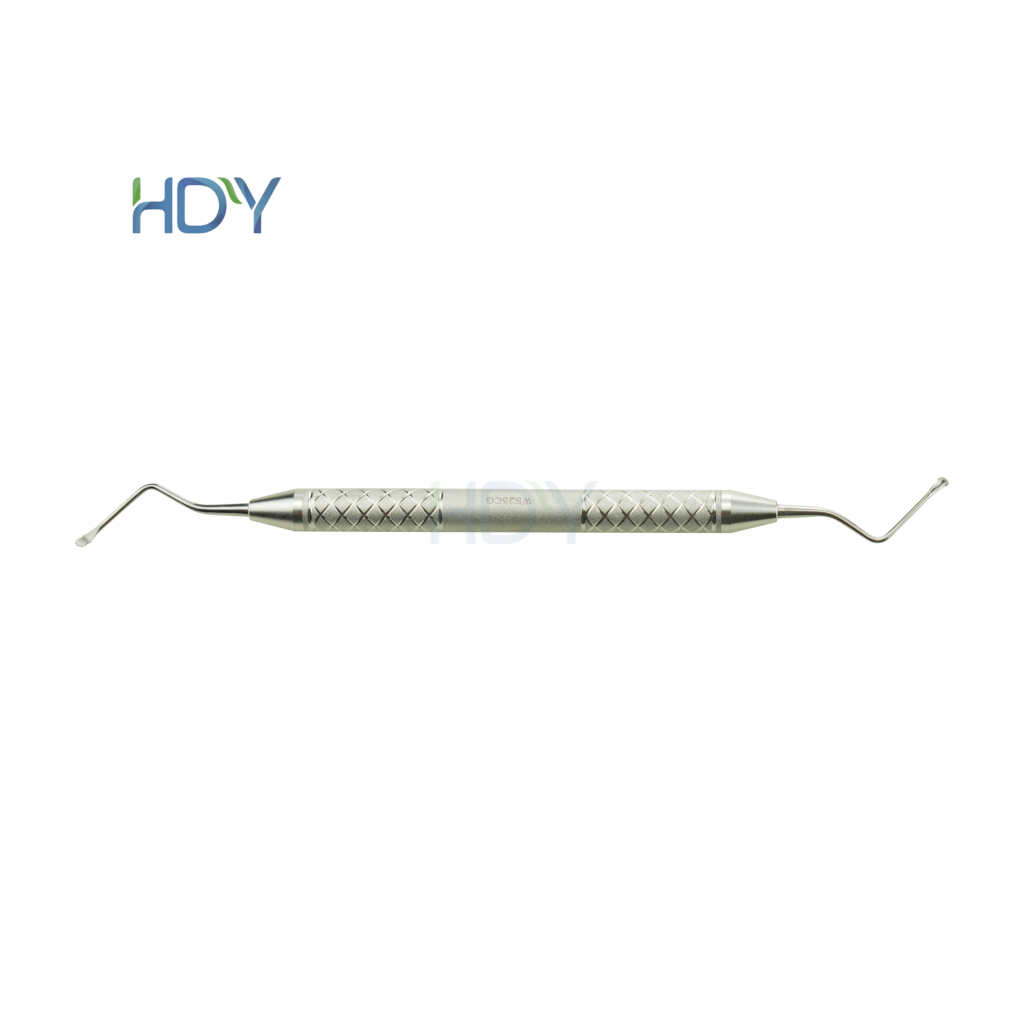
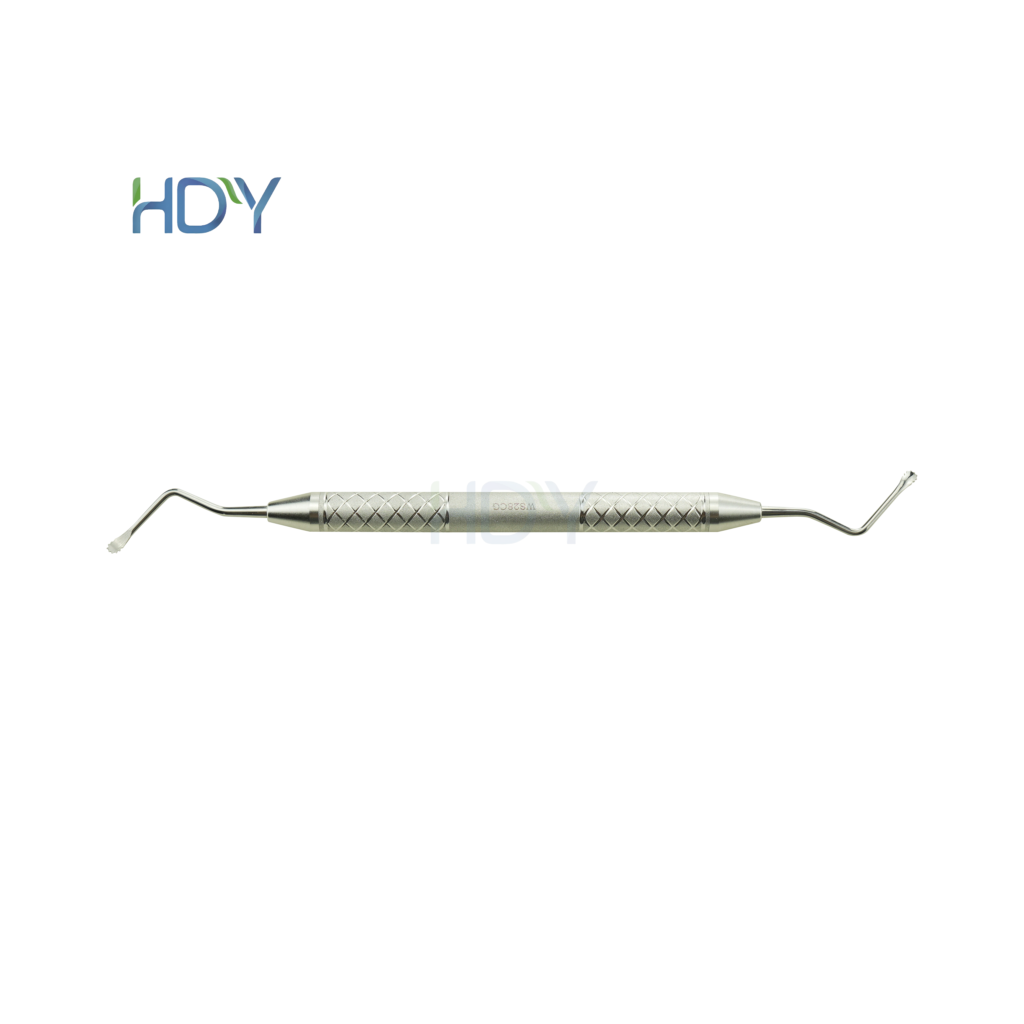
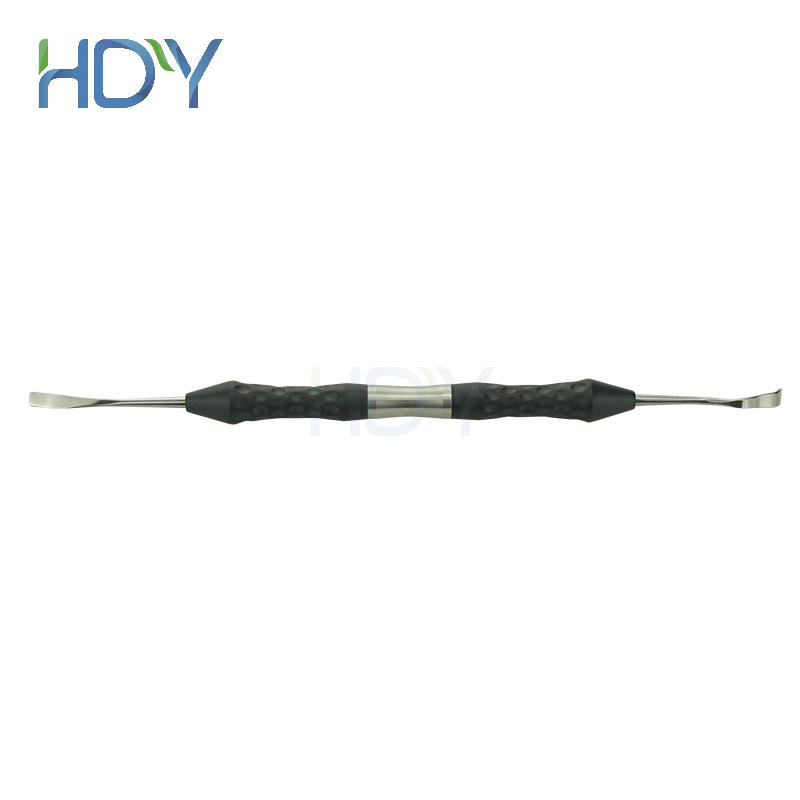
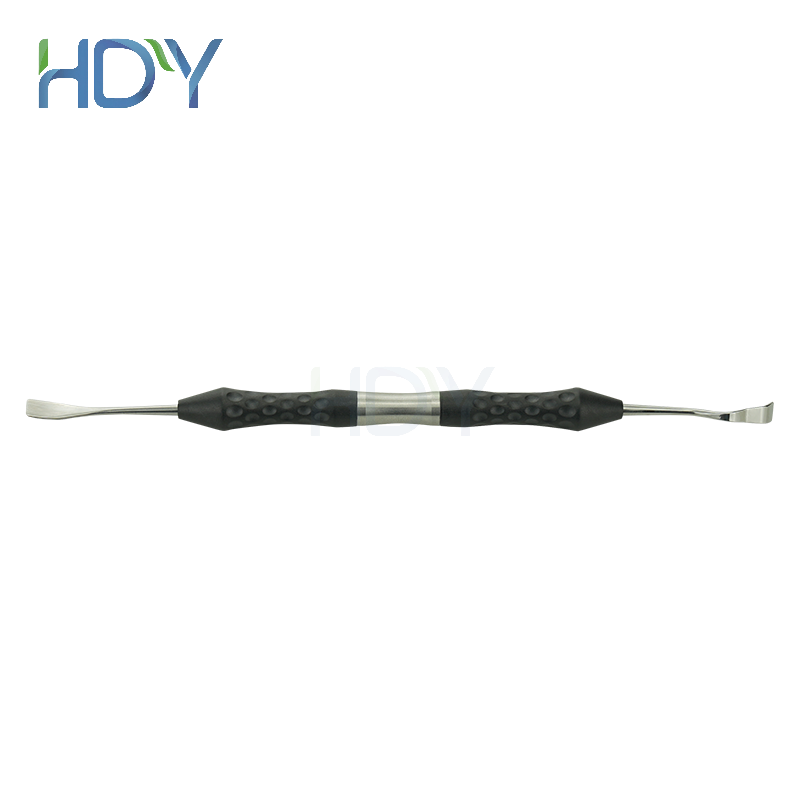
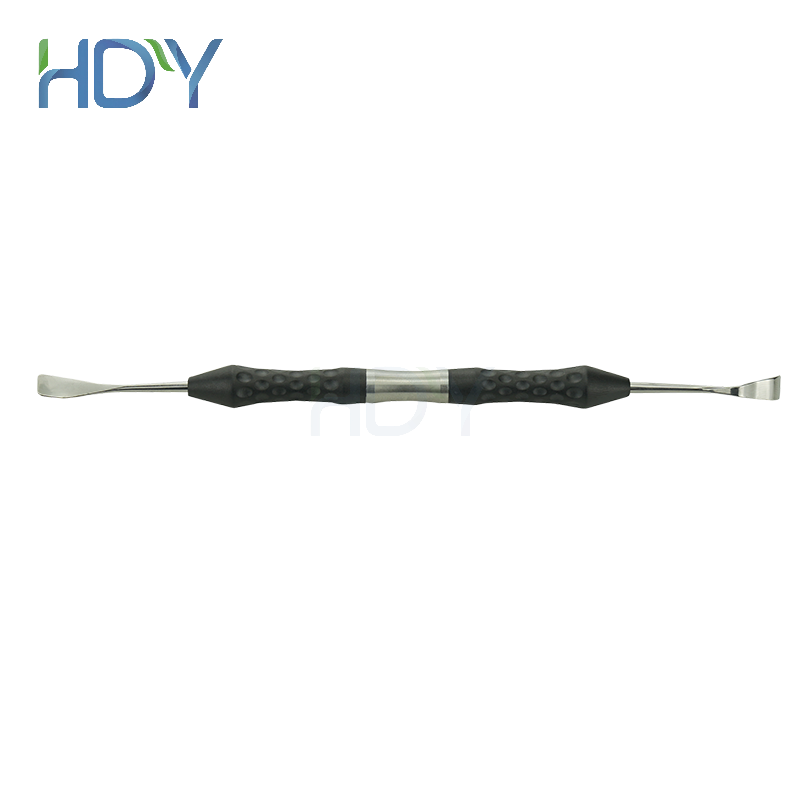
The HDY WS20G 2.0 mm surgical curette combines a compact working end with a solid metal handle. HDY positions it for oral surgery, extraction-socket cleaning, bone curettage and removal of granulation tissue.
Debridement considerations
- Choose the curette diameter according to the surgical site and visibility.
- Work progressively and maintain awareness of the surrounding anatomy.
- Reserve toothed designs for situations requiring their more active cutting action.
- Avoid uncontrolled pressure against thin bone walls or delicate anatomical structures.
- Remove visible debris from instruments promptly after use before validated reprocessing.
4. Cutting and microsuturing
Surgical scissors may be used for controlled soft-tissue cutting or trimming suture material. Blade geometry, length and curvature should match the working depth and surgical approach.
HDY dental and microsurgical scissors
The HDY dental scissors range includes:
| Model | Official configuration | Typical role |
| JW12 | Curved scissors, 12.5 cm | Controlled soft-tissue cutting and surgical access |
| JZ12 | Straight scissors, 12.5 cm | Trimming suture tails and accessible materials |
| JS11 | Double-curved scissors, 11.5 cm | Cutting in restricted or angled areas |
| JX18Z / JX18W | Straight or curved microsurgical scissors, 18 cm | Fine cutting under magnification |
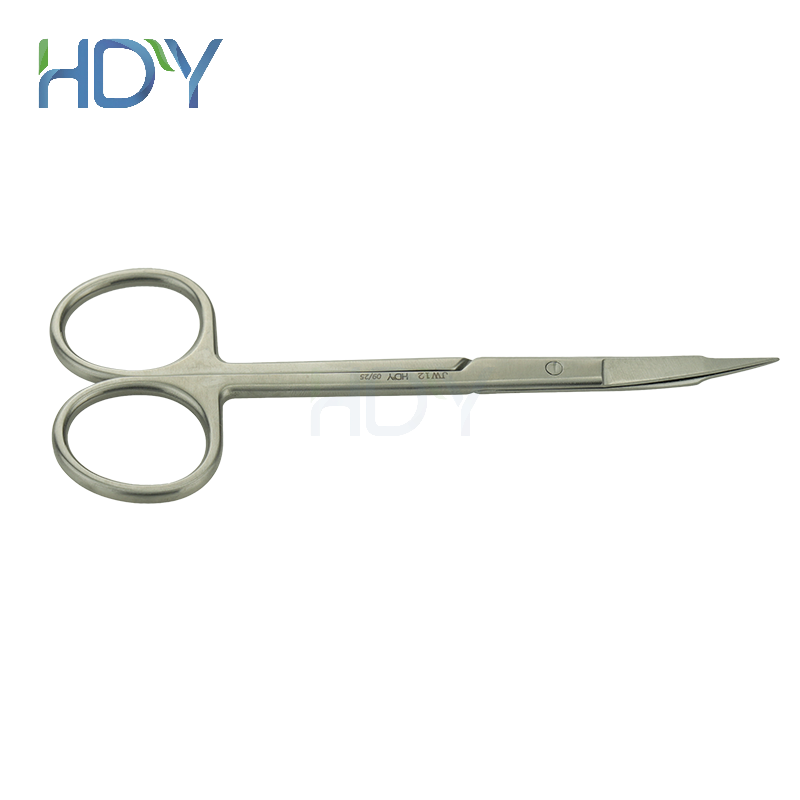
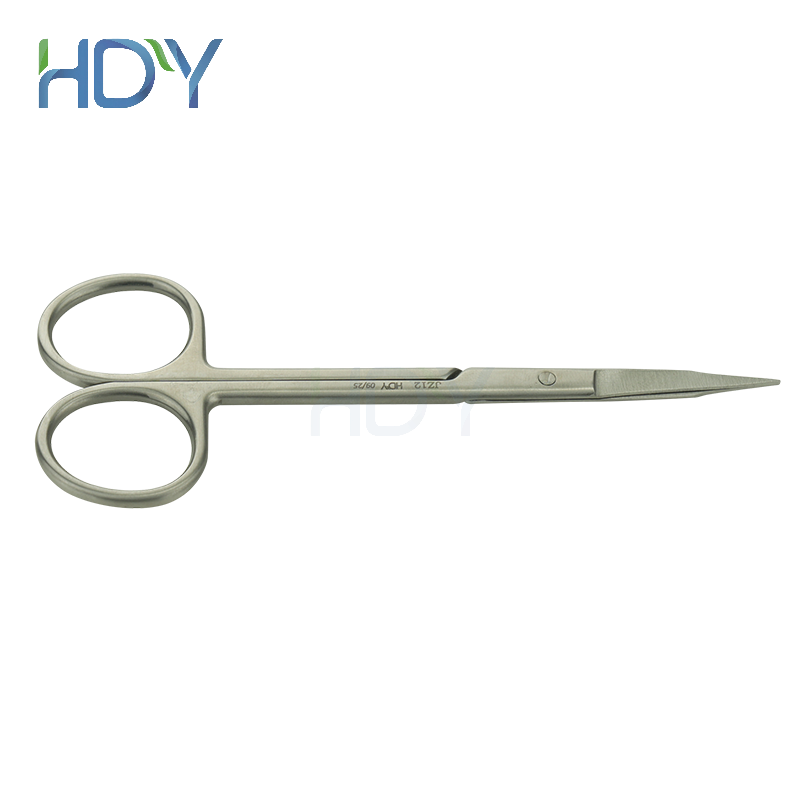
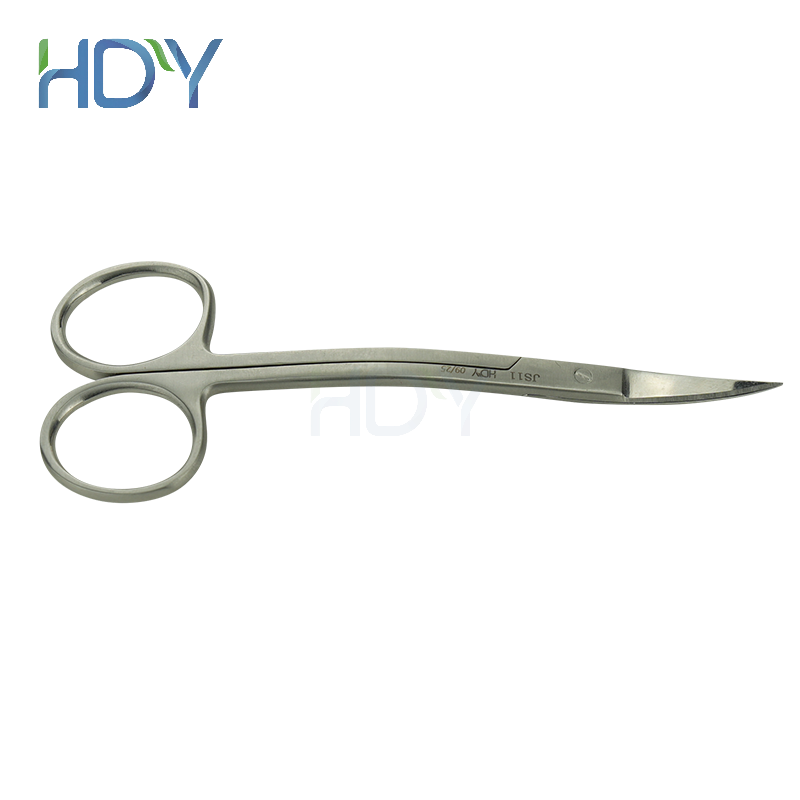
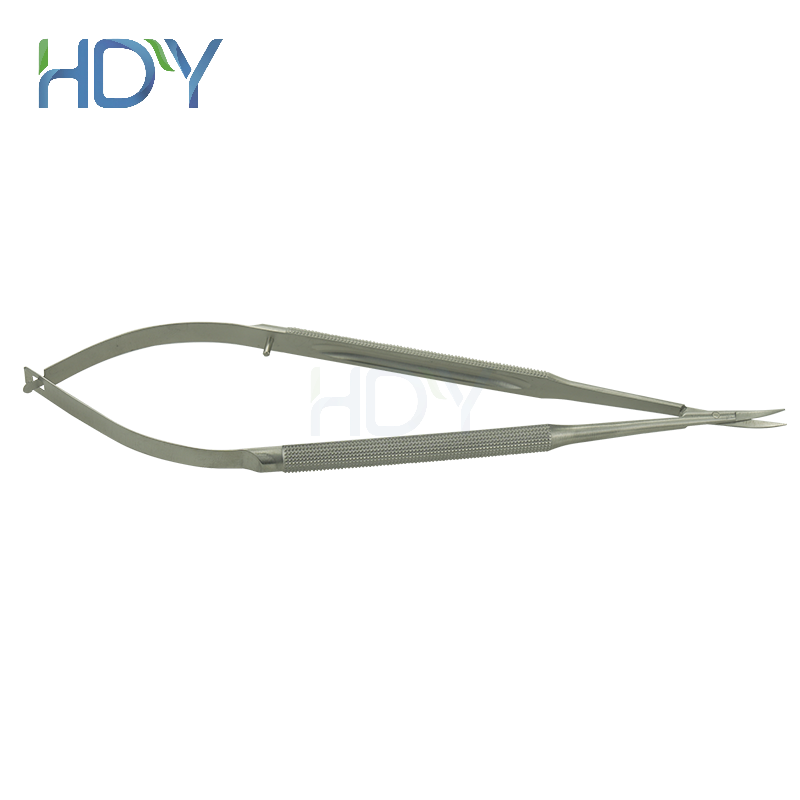

The curved JW12 can support access around soft tissue, while the compact double-curved JS11 is designed for restricted working areas. The JX18 series provides extended microsurgical configurations for fine procedures performed under magnification.
Cutting considerations
- Use the selected scissor only for its intended cutting task.
- Maintain visibility of both blade tips before closing the instrument.
- Avoid pulling delicate tissue while cutting.
- Inspect alignment, cutting performance and joint movement routinely.
- Remove deposits from the blades before the sterilization cycle.
5. Retraction and surgical-field exposure
Adequate exposure allows the surgeon to identify anatomical structures, maintain instrument control and protect the wound margins. A retractor should improve access without applying excessive or prolonged pressure to soft tissue.
HDY LG02 Minnesota retractor
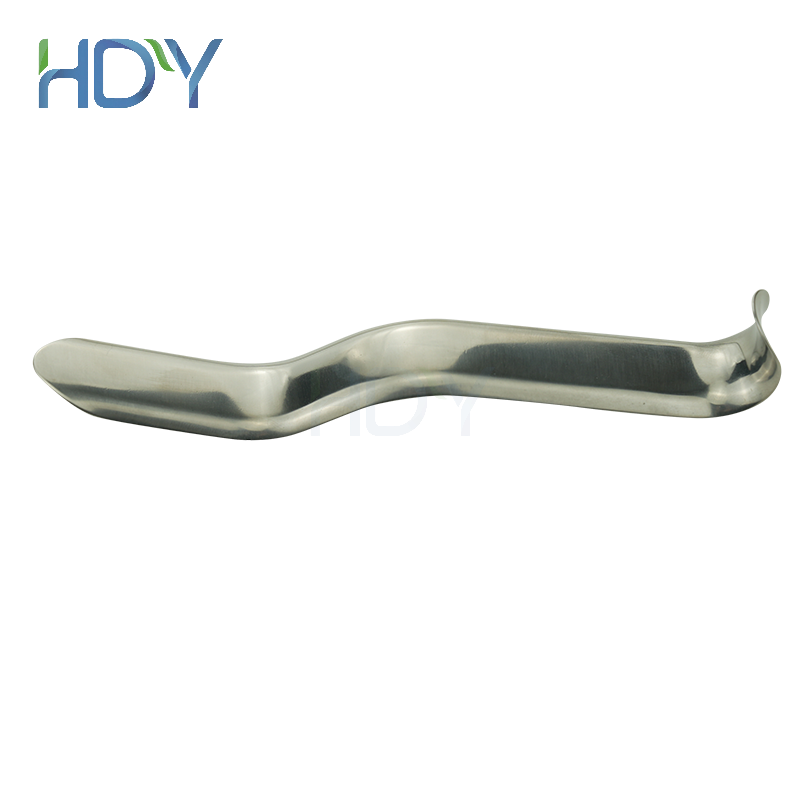
The HDY LG02 Minnesota retractor is designed for cheek, lip and flap retraction during oral surgical procedures. Its shape supports access to posterior and lateral operating areas while helping the assistant maintain a clear field.
HDY LG07 retractor pair
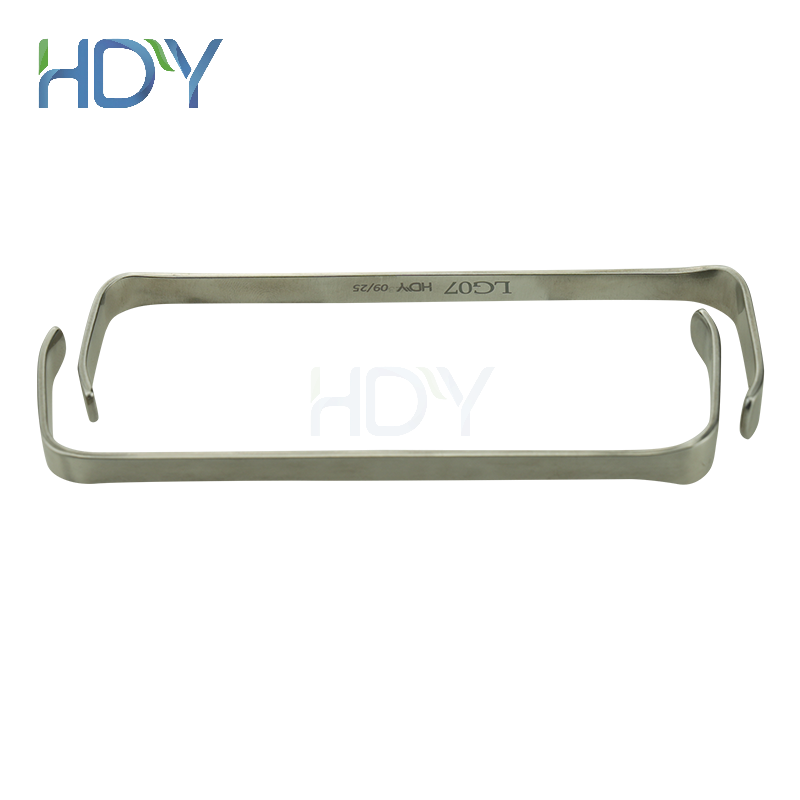
The LG07 is supplied as a retractor pair and can support symmetrical or procedure-specific soft-tissue retraction.
Retraction considerations
- Position the working end under direct visualization.
- Apply stable, even traction rather than intermittent forceful pulling.
- Avoid trapping the lip, cheek or flap against teeth or instruments.
- Reassess tissue colour and pressure during longer procedures.
- Coordinate retraction with suction so the retractor and aspirator do not obstruct one another.
View all HDY cheek retractors and dental aspirators.
6. Building an integrated HDY oral surgery instrument setup
| Surgical stage | Instrument categories | Example HDY models |
| Incision and reflection | Scalpel handle and periosteal elevators | DB02, BY03G, BG08G, BG09G, BG14G |
| Tissue handling | Tissue pliers and micro tissue forceps | NZ12C, NZ15C, NX18, NX18W |
| Needle control | Conventional and Mic Castro needle holders | ZC15, ZC16, ZX18Z, ZX18W |
| Curettage and debridement | Surgical curettes and bone scrapers | WS20G–WS35G, WS20CG–WS28CG, ZG4G–ZG6G |
| Cutting | Surgical and microsurgical scissors | JW12, JZ12, JS11, JX18Z, JX18W |
| Exposure | Cheek retractors and suction instruments | LG02, LG07 and HDY aspirators |
This workflow-based selection can help clinics, hospitals and distributors assemble instrument sets for oral surgery, implant surgery, periodontal surgery and microsurgical procedures.
7. Why choose HDY oral surgery instruments?
Broad dental surgical instrument portfolio
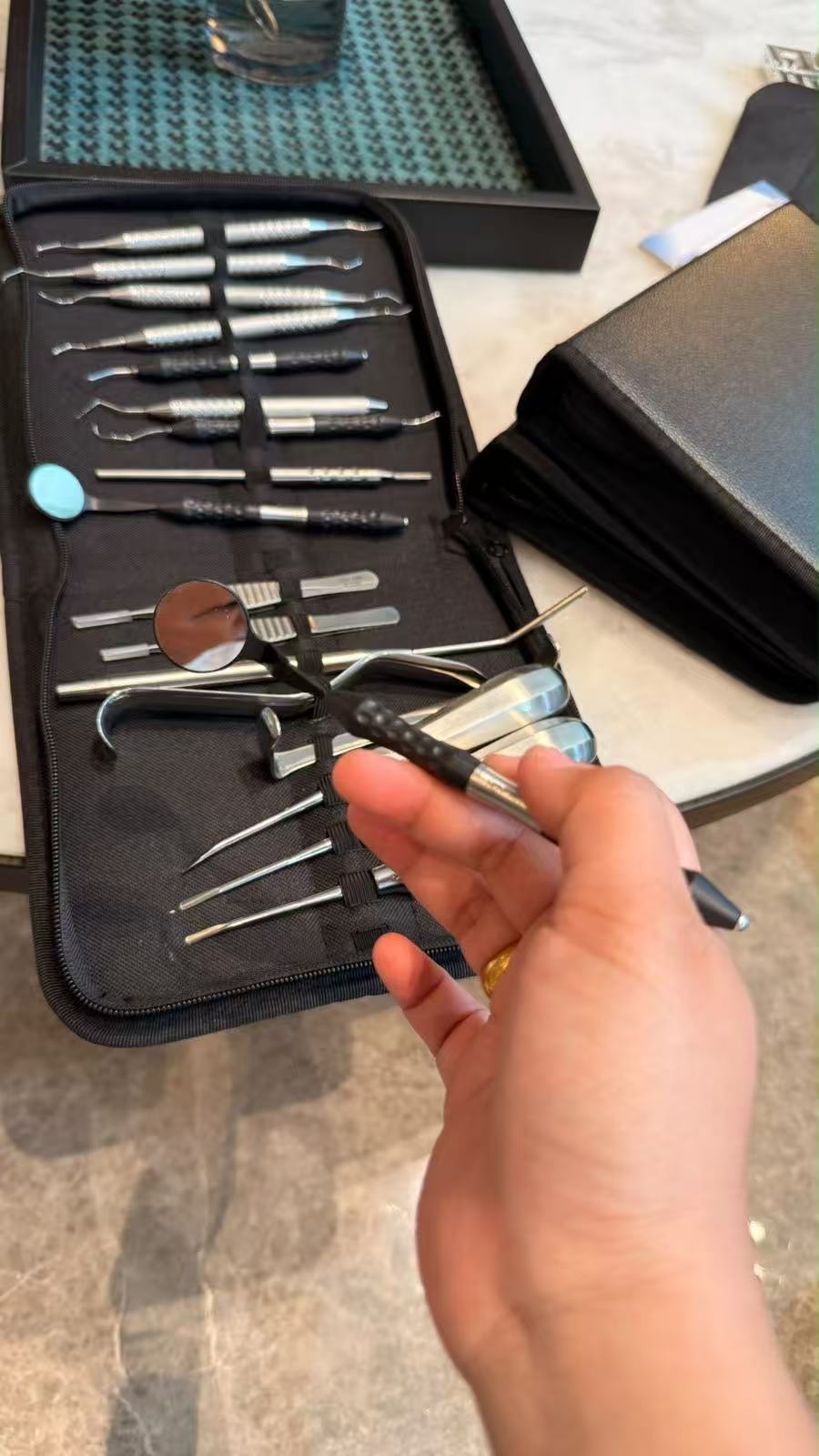
HDY provides product categories covering surgical instruments, hinged instruments, diagnostics, endodontics, operative dentistry and instrument cassettes.
Precision manufacturing and quality control
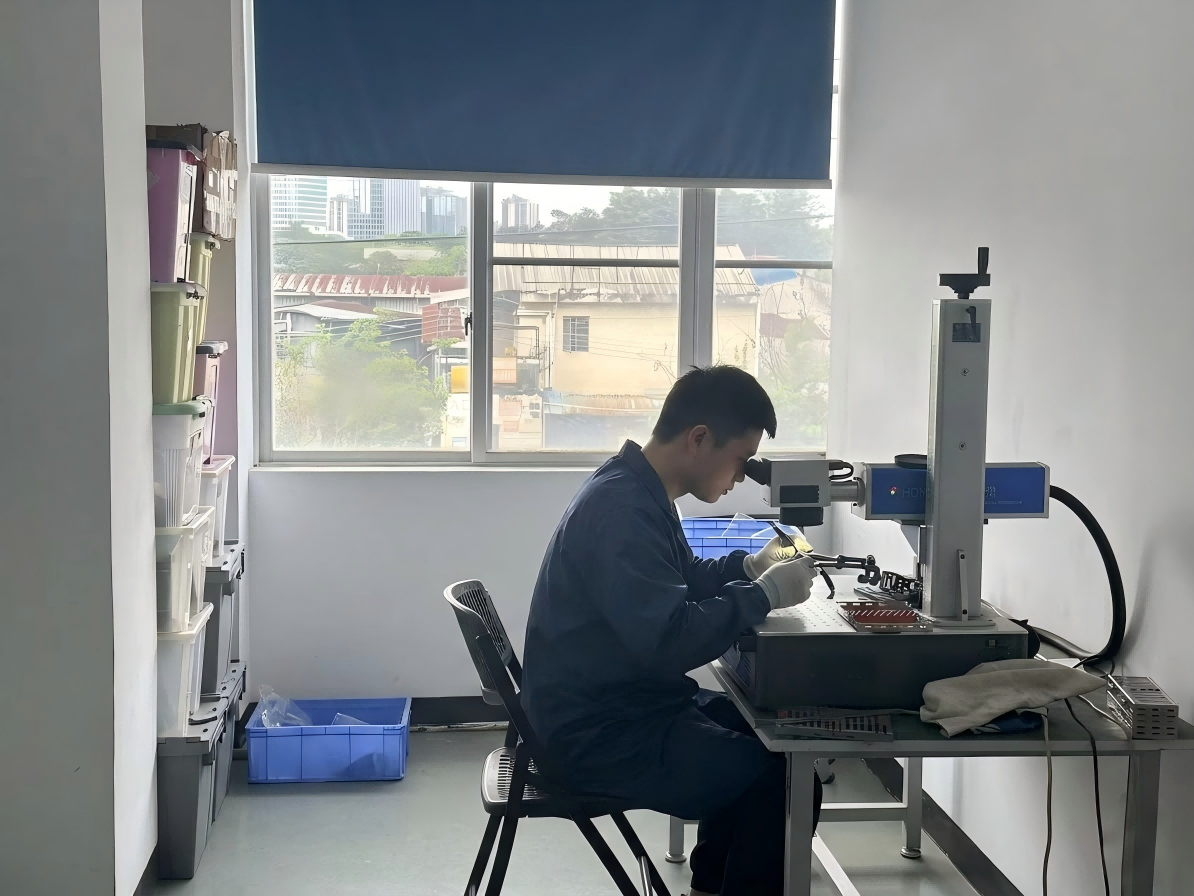
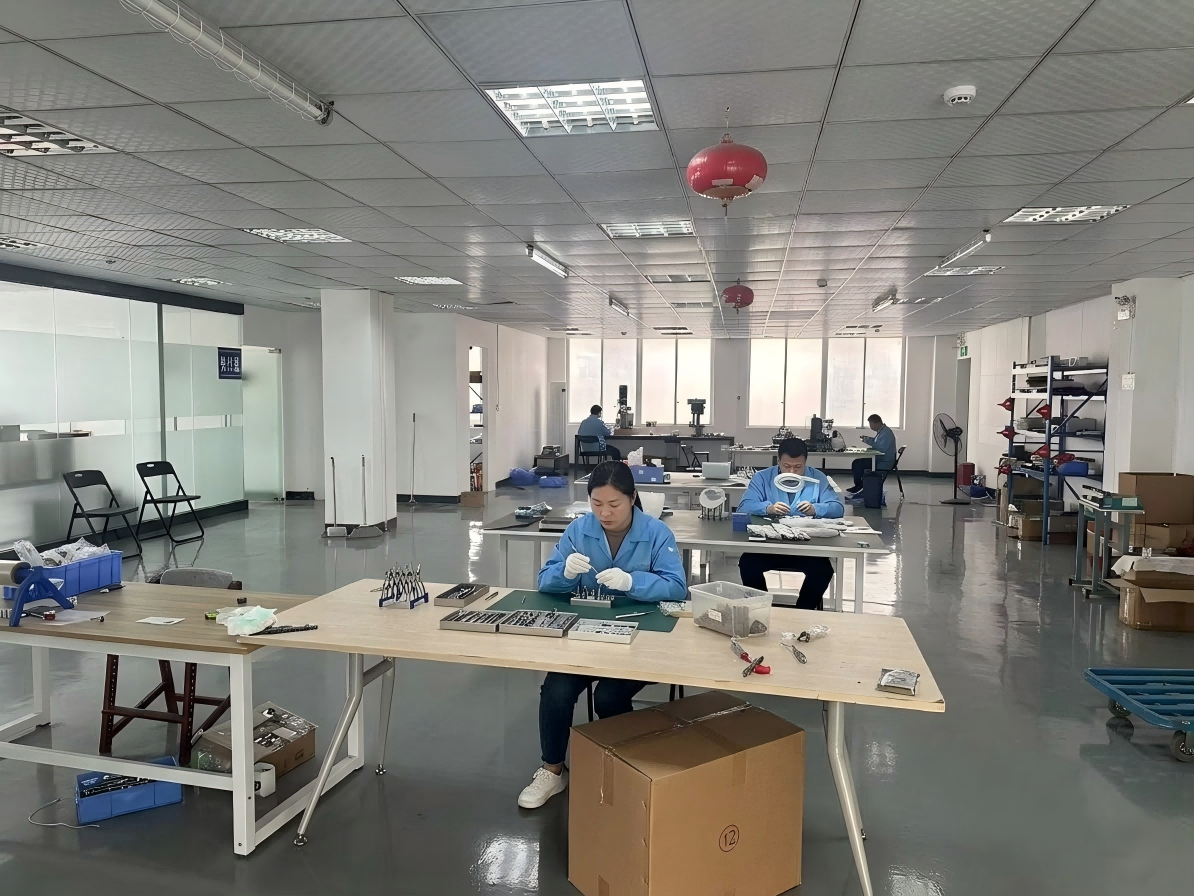
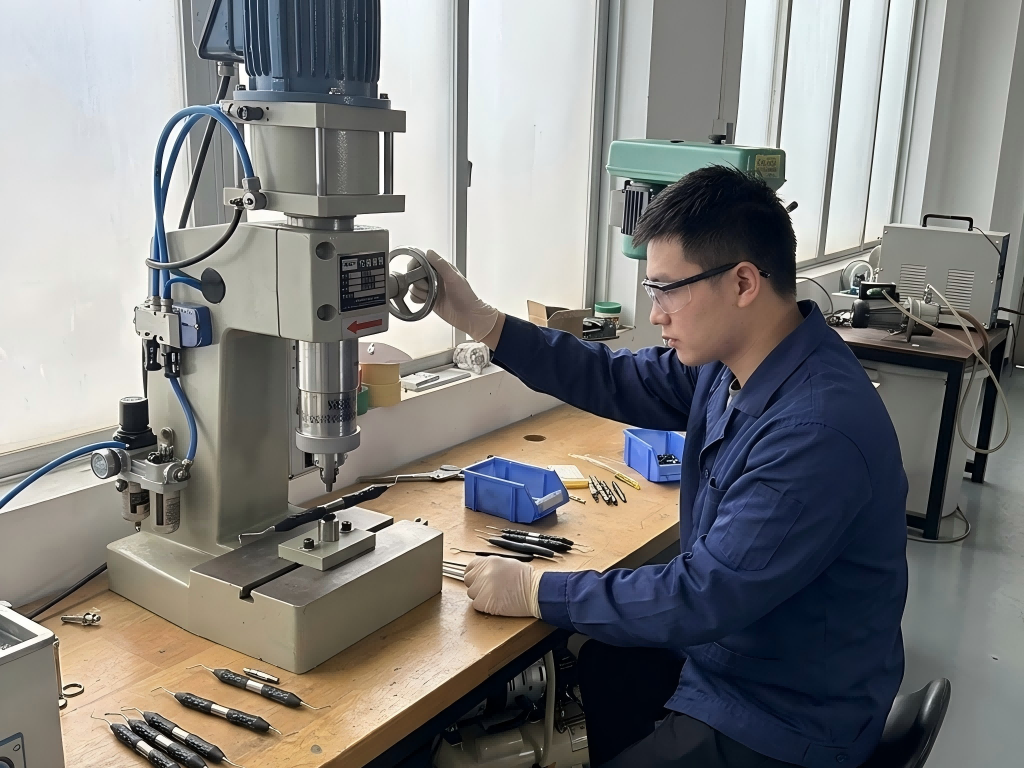
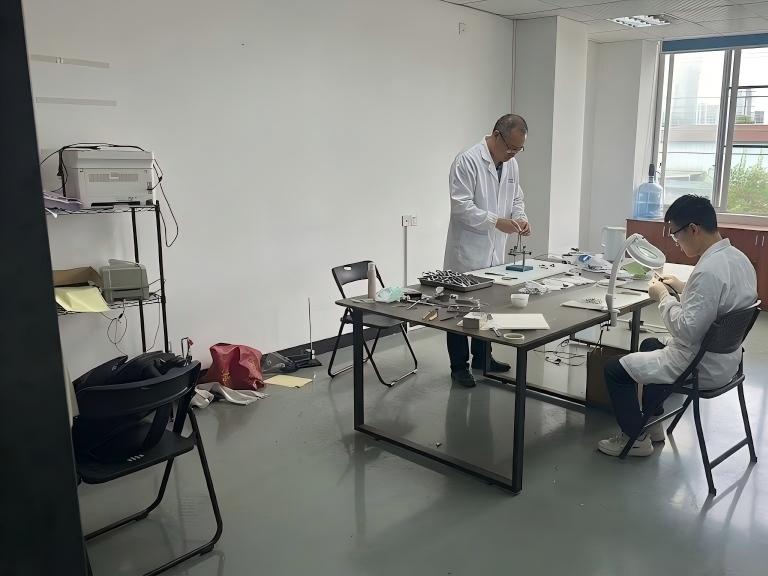
According to the HDY company profile, production integrates design, machining, heat treatment, surface finishing and multi-stage inspection. This supports consistent instrument dimensions, surface quality and functional performance.
Stainless-steel construction
HDY surgical instruments use stainless-steel construction selected for durability, corrosion resistance and reusable clinical workflows. Material and sterilization specifications should always be confirmed on the relevant product page or technical documentation.
Instrument designs for conventional and microsurgical procedures
The product range includes compact conventional instruments and extended micro instruments designed for use under magnification.
OEM and ODM dental instrument manufacturing
HDY provides OEM and ODM dental instrument services for distributors, dental brands, clinics and hospitals. Available support includes:
- Private-label dental instruments
- Custom instrument design and product development
- Handle, surface and colour customization
- Laser logo engraving
- Dental cassette configuration
- Custom packaging and branding
- Sampling and manufacturing support
8. Cleaning, inspection and sterilization
Reusable dental surgical instruments must be reprocessed according to the manufacturer’s instructions, applicable regulations and the healthcare facility’s validated infection-control procedures.
General considerations include:
- Prevent blood and tissue from drying on the instrument after use.
- Clean hinges, serrations, cutting edges and narrow working ends carefully.
- Inspect instruments for corrosion, cracks, deformation and loss of sharpness.
- Confirm that hinged instruments move freely and align correctly.
- Protect delicate microsurgical tips during cleaning and storage.
- Use only the sterilization parameters specified for the individual product.
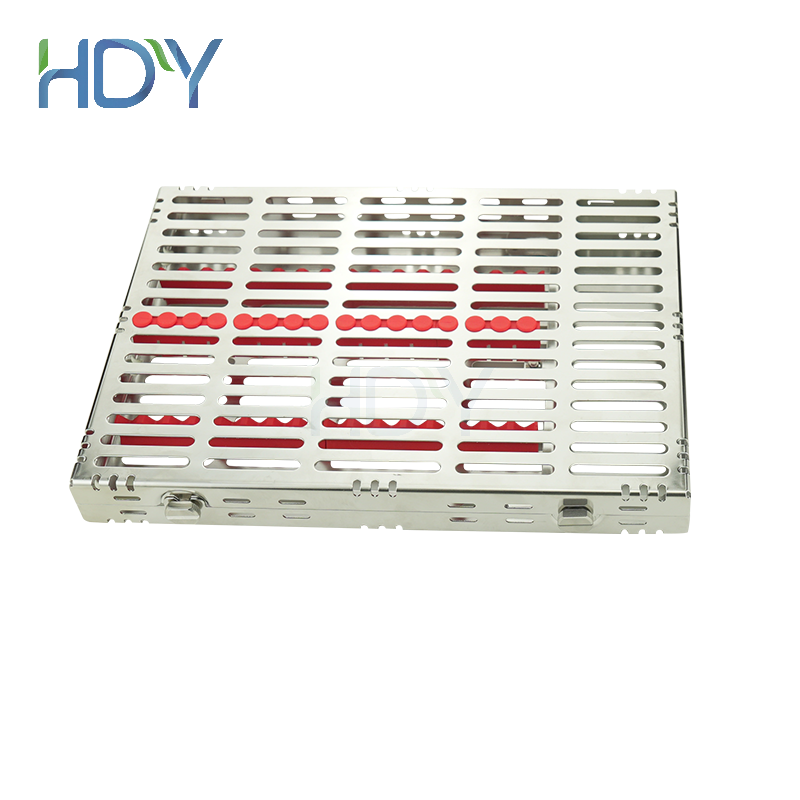
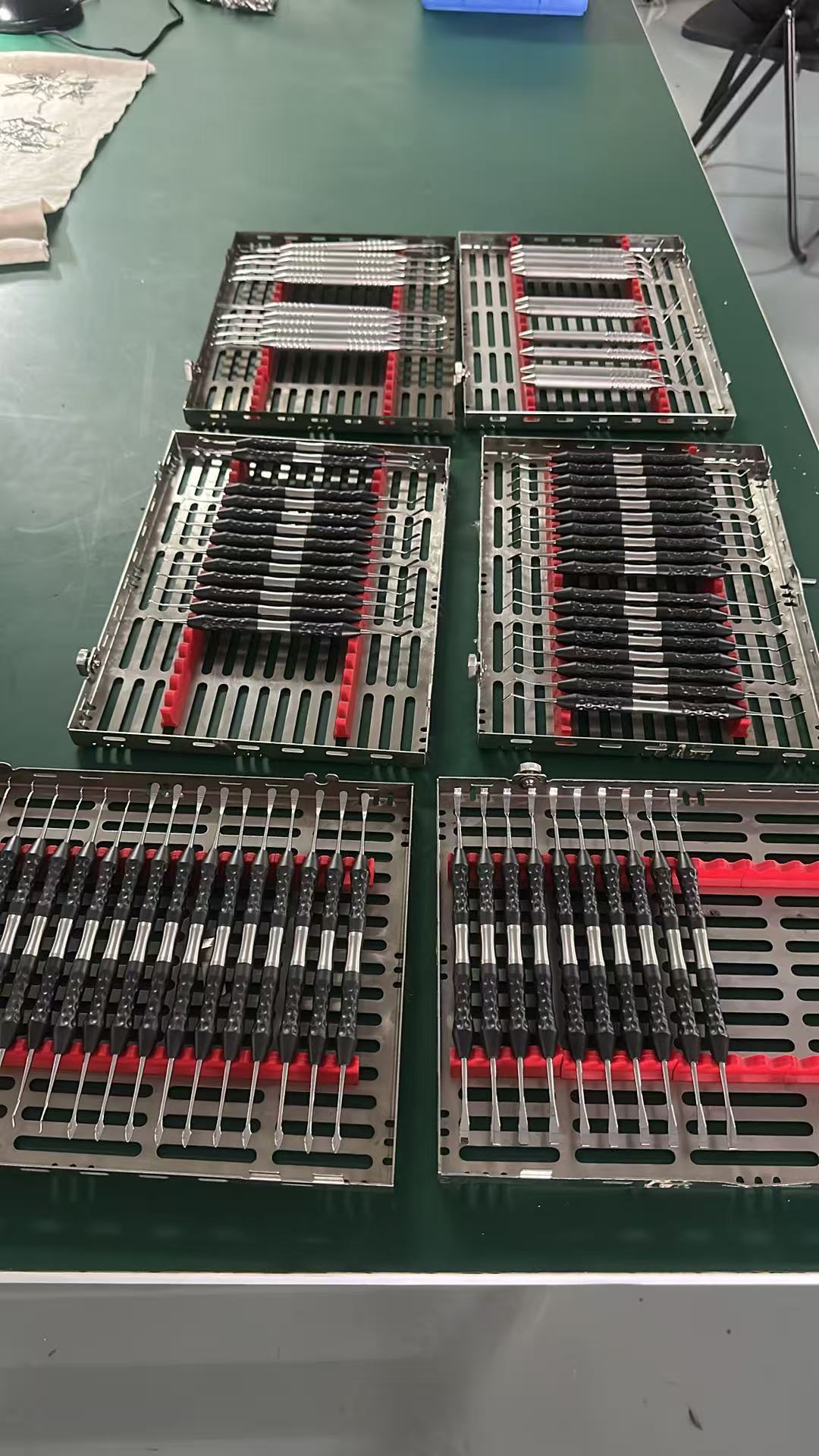
- Store processed instruments in an appropriate dental instrument cassette or validated packaging system.
Precision instruments for controlled oral surgery
Oral surgery is performed within a small and anatomically complex operating field. Predictable procedures depend on clear exposure, deliberate tissue handling and instruments selected for each clinical step.
By combining periosteal elevators, tissue pliers, tungsten-carbide needle holders, surgical curettes, microsurgical scissors and cheek retractors, HDY Dental provides a coordinated instrument portfolio for modern oral and implant surgery.
For product specifications, distributor pricing, samples or private-label manufacturing, contact HDY Dental.
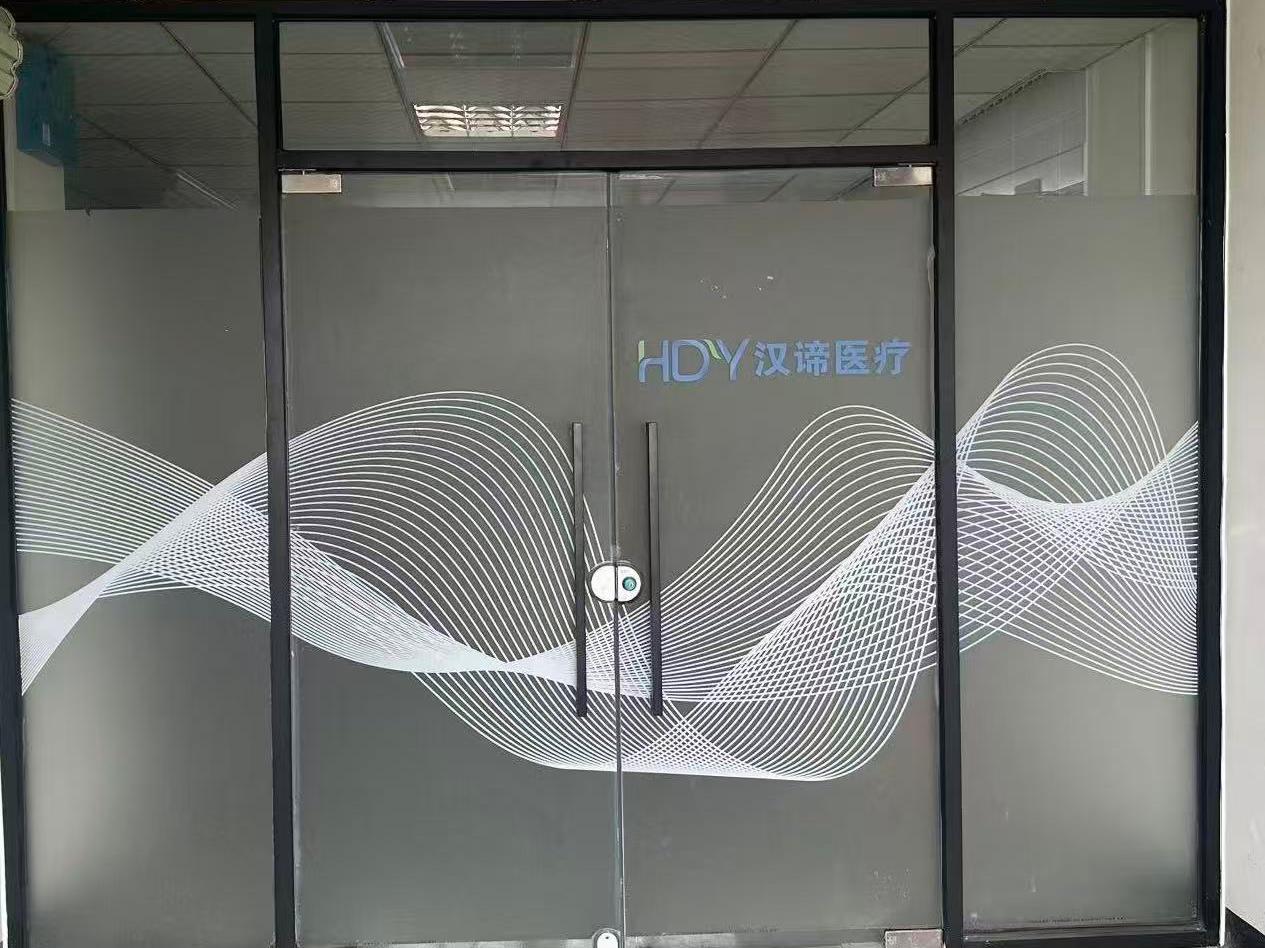
HDY Medical Technology (Guangzhou) Co., Ltd.
Professional dental and oral surgical instrument manufacturer
Website: https://hdydent.com/
Email: info@hdydent.com
 English
  简体中文
简体中文  Español
  Deutsch
  Français